Island Peak Climbing with EBC Trekking - 20 Days
 Fullscreen
4.9 ★★★★★
Tripadvisor reviews
Activity
Climbing & Trekking
Duration
20 Days

Grade
Difficult Plus
Overview
Island Peak (also known as Imja Tse at 6190m) is the most popular Peak climbing for trekkers in Nepal. It is considered the perfect introduction to mountaineering in the Himalayas. In addition to climbing, the Island Peak Climbing with EBC Trek also provides an excellent mix as you also get to hike to the base camp of Mount Everest. When you reach the Sherpa village of Dingboche, the view of this peak looks like a mountain standing out of the sea of snow that surrounds it, thus the name “Island Peak”. From its summit, you can enjoy spectacular views of Mount Everest (8849 m), Mount Lhotse (8516 m), Mount Nuptse (7861 m), Mount Makalu (8485 m) and Ama Dablam, creating an absolutely breathtaking panorama, undoubtedly one of the most amazing in the Himalayan range.
In preparation for climbing Island Peak as well as trekking to Everest Base Camp, Trekking Mart has arranged this magnificent 20-day climbing expedition. Your climb is via “Classic South-East Flank/South-West Ridge”, which involves lots of scenic hiking, gradual elevation gain and lots of climbing practice before you attempt the climb. Whether you've never been involved in Himalayan mountaineering or not, this climbing trip will give you an unforgettable experience that only Trekking Mart can give. Why not indulge your lifelong dream of climbing a mountain in the Himalayas? Island Peak Climbing with EBC Trekking is the perfect answer!
Highlights of the Trip
Visiting UNESCO World Heritage Sites in Kathmandu
Reaching the summit of Island Peak for a spectacular view of the Khumbu region.
Visiting UNESCO World Heritage Sites in Kathmandu
Visiting Everest Base Camp (EBC)
Seeing the world’s highest Buddhist monastery at Tengboche
Walking across glaciers
Having an experience mountain climbing guide.
Itinerary
A representative from Trekking Mart welcomes you at arrival gate of Tribhuvan International Airport, in the legendary city of Kathmandu. You will be taken to your hotel and can spend the rest of day will be spend relaxing from your long flight. At evening Trekking Mart offers you a welcome dinner at a delicious, traditional Nepali restaurant where you can enjoy Nepalese cultural dance presentation as well.
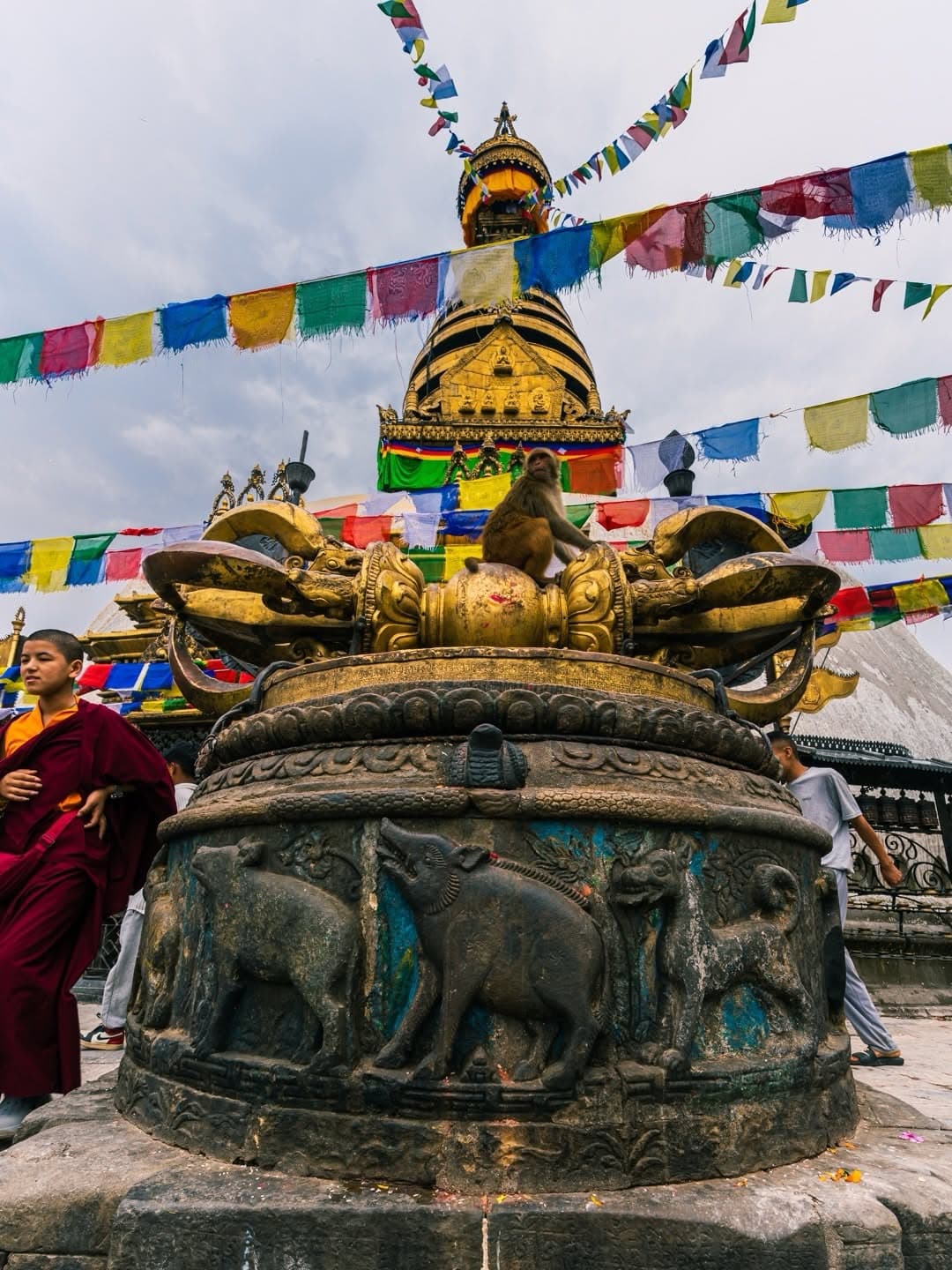
Your first full day is for a sightseeing tour to several of the cultural UNESCO world heritage sites of Kathmandu city. An expert Trekking Mart city guide will guide us to sacred Hindu temples, Buddhist shrines and historical monuments as you become acquainted with Nepalese culture and traditions. We will visit Swayambhunath, Kathmandu Durbar Square, Pashupatinath temple, Boudhanath stupa. Their extreme art and architecture are our center of attraction. Thereafter, Trekking Mart will organize a trek orientation program and also assist you on trekking preparation (equipment’s packing, etc).
Following an early morning breakfast, transfer to local airport and fly east to Lukla. This spectacular 30 minute scenic flight takes you over incredible Himalayan ranges, awesome landscapes and quaint villages that cling to the sides of the mountains. At Lukla you’ll meet all crew members and begin trek northward to Phakding village. Overnight stay at Phakding.
Note: Alternative way is drive to Ramechaap then then fly to Lukla.
We begin our trek on uphill and downhill trails with multiple crossings over the Dudh Koshi River. We enjoy magnificent view of Mt. Thamserku (6,608m) from Benkar village. We cross more bridges and reach the entrance of Sagarmatha National Park at Monjo, where our trekking permits are checked. We walk further and pass through Jorsale village before reaching the Sherpa capital of Namche Bazaar. From here, we get beautiful views of the Himalayas including Everest, Lhotse, Tawache and others. We spend two nights in Namche Bazaar.
This is a rest day which will help us acclimatize to the high altitude of the Khumbu region. Acute Mountain Sickness (AMS) is a very serious condition, and Trekking Mart takes it seriously. The best way to avoid AMS is to take a day and allow the body to adjust to the thinner mountain air.
Since experts believe that it is better to stay active even during rest days for better trekking experience, we are going to spend the day enjoying small hikes in and around Namche Bazaar. We hike up to Everest View Hotel to enjoy admirable views of the Himalayan vista. On our way back to Namche, we also tour the Khumjung Monastery (houses a yeti scalp!) and Hillary School. Our guide can also take us to the Tourist Visitor Center near the headquarter of the Sagarmatha National Park where we can observe an assortment of things related to the first Everest ascenders, Sherpa culture and learn about the various plant and animal life in the Everest region. Overnight in Namche Bazaar.
After morning breakfast, we will begin trekking to Tengboche. Today we will see stunning vistas of Everest (8,848m), Nuptse (7,879m), Lhotse (8,516m), Ama Dablam (6,812m) and Thamserku (6,623m). The trail ascend towards the Tengboche where we discover the largest monastery in the Everest region. It is also the world’s highest Buddhist monastery in the world. Along the way we will see wildlife like Pheasant, Musk Deer or a herd of Himalayan Thar. We strive to reach Tengboche in the afternoon and will allow us to be able to witness a religious Buddhist ceremony. Overnight stay at Tengboche.
Today, is a spiritually uplifting experience as we make an early morning visit to the beautiful Tengboche Monastery. We continue our trek by descending down through Deboche, cross the river and continue the trek up to the traditional and cultural Sherpa village of Pangboche. The trail is gradually rising through the alpine landscapes with magnificent views of snowcapped Himalayan peaks to reach the Phiriche. Overnight stay at Phiriche.
After morning breakfast, we start our trek on an easy and straight path towards the riverside and continue to Dugla. The trail gradually rises upwards through rocky mountain landscape with the breathtaking mountains views. We trek few hours to reach the Lobuche where we stay overnight.
Today's trek is one of our longest as we are reaching Everest Base Camp. We follow a trail through the valley alongside the Khumbu Glacier, crossing the glacier and enjoying a magnificent overview of the massive Khumbu Glacier. The trail rises and falls into the valley and up towards the base camp area. Walking first on the moraine crest and finally on the Khumbu Glacier itself, we reach Everest Base Camp (5,364m), one of the iconic places to see most of the world's highest mountains, close beneath the stupendous Khumbu Icefall. We spend some time at this inspirational spot and enjoy meeting the Everest mountain climbers as they either prepare for the summit or return in triumph. We retrace our steps to Gorak Shep for an overnight stay, as there is no place to stay at Everest Base Camp.
Today is one of the highlights of our trek. Early morning, we will start the trek for a wonderful sunrise from Kala Patthar, the highest point on the Everest Base Camp Trek. It takes around 1½ to 2 hours of walking to reach the top, where we see breathtaking views of Mount Everest, Lhotse, Nuptse, and Pumori—a wonderful Himalayan scene that will be a memory forever. After filling our hearts with awe and taking photos for a lifetime, we walk down to Gorak Shep for breakfast. Then we slowly go down the mountain to Lobuche. Overnight stay at Lobuche.
Today, we trek down to the village of Dingboche and then head towards the wonderful Chhukung Valley. The trail weaves along stone-walled walkways that separate traditional Sherpa farms. We enter into river valleys and glacier moraine with splendid views of Ama Dablam and Lhotse. The huge Island Peak is visible from starting of Bibre village, seemingly welcoming us to the valley. Chhukung (4,730m) lies under the impressive rock wall that connects Nuptse and Lhotse where offering some of the most beautiful mountain sights in the Everest region. Resting two nights at Chhukung.
Today, we take a day rest to adjust our body to the high altitude while enjoying the amazing Himalayan views. Instead of staying idle, we hike to Chhukung Ri (5,550m). It is an appreciative viewpoint located directly above the Chhukung village. We will walk back to the Chhukung village where we stay overnight.
Early morning, we start our trek from Chhukung to Island Peak Base Camp, walking alongside Imja Valley and Imja Khola. The trail shows us incredible panoramas of Ama Dablam, the Lhotse Glacier, and the stunning Nuptse–Lhotse wall. After crossing glacier moraine and the large valley at Pareshaya Gyab, we move on to the base camp which is located under the massive peaks. Immersed in the stunning Himalayan scenery, we reach Island Peak Base Camp and stay overnight at the tented camp.
Today we trek towards the High Camp. Along the way we are crossing the glaciers, moraine and small mountain streams on a steady ascent from Base Camp. After reaching the High Camp just acclimatization and head back to base camp for acclimatization and training. Overnight stay tented camp at High Camp.
Today is the most challenging and rewarding day of trek. We begin our summit climb very early: around 1 AM. After breakfast, we climb towards the Island Peak through the rock gorge before reaching the summit glacier. We rope up for the glacier as it contains several crevasses. A steep snow slope leads us onto the summit ridge, reaching on top. We come early in order to see the most breathtaking sunrise views and a spectacular panorama of Nuptse, Lhotse, Lhotse Middle Peak, Lhotse Shar, Makalu and Ama Dablam. We spent a few hours and making unforgettable memories. After celebrating the summit views and taking pictures, we descend down along the same trail to Chhukung. Overnight stay at Chhukung.
It is a backup day when bad weather, high winds, or other unexpected things that could delay the summit. The Himalayan weather can be fickle, and it doesn’t care about your schedule. Trekking Mart always emphasizes safety over all else in the mountains and believe it helps to do everything in our power to have this extra day available in case we need to make adjustments for an extra day for someone to acclimate or recover. If everything goes as planned, this day will be skipped.
After the successful climb to the top of Island Peak, we start our trek back to Namche Bazaar. Descending down through the beautiful villages of Dingboche, Pangboche and Tengboche surrounded by the magnificent Himalayan scenery with the forests of rhododendron and pine to reach the Namche Bazaar. Overnight stay at Namche Bazaar.
This is the final day of trekking as we make our way to the airport at Lukla. We continue our descent, passing through mountain forests and Sherpa villages. We will spend a night at Lukla.
Finally, a day with no trekking as we’ll take a scenic morning flight back to Kathmandu. Upon arrival, shift to hotel and spend rest of time relaxing. Do some last-minute shopping. Stay overnight in Kathmandu.
Meals: Breakfast only
Our amazing journey came to an end today. Trekking Mart will pick you up from your hotel and drop you off at the airport 3 hours before our scheduled flight. Before you leave the legendary land of Nepal, be sure to talk with your friends at Trekking Mart about other inspiring adventures. We have further adventures into not only Nepal, but Bhutan, India, Tibet and now with our associates in East Africa for safaris and African mountain climbing. Your Trekking Mart family wishes you the best time ahead.
Meals: Breakfast only
Include / Exclude
Service Included
- ✓
Airport pickup and drop off
- ✓
Day 2 Kathmandu guided city tour by car
- ✓
Hotel in Kathmandu with breakfast (We offer 3 to 5-Star luxury hotels)
- ✓
Meals (Breakfast, Lunch, Dinner) during the trek
- ✓
Lodge to lodge accommodation during the trek
- ✓
Trekking permits and National parks fees
- ✓
An experienced English-speaking trekking guide.
- ✓
Local porters to carry your baggage
- ✓
Staff food, accommodation, salary & insurance.
- ✓
Welcome dinner with cultural show.
- ✓
All governmental procedure
- ✓
Applicable Taxes
- ✓
Rescue arrangement in case of emergency
Service Excluded
- ✘
International flight (If you need, we are happy to assist you on it).
- ✘
Nepal visa fee
- ✘
Travel Insurance
- ✘
Lunch & dinner other than mentioned
- ✘
Bar and laundry bills
- ✘
Emergency rescue/evacuation costs
- ✘
Tips for guide & porter
4.9 ★★★★★
Tripadvisor reviews
Activity
Climbing & Trekking
Duration
20 Days
Grade
Difficult Plus
Essential Information
We've compiled some of our Frequently Asked Questions to help you learn more about this amazing trip.
All travelers (except Indian nationals) must have a passport valid for at least six months from the date of arrival in Nepal.
Tourist visas are available:
On arrival at Tribhuvan International Airport
At major land border immigration offices
At Nepali embassies and consulates abroad
Travel insurance is strongly recommended, especially for trekking and climbing activities. Your insurance should cover emergency medical treatment and evacuation. Although it is possible to travel without insurance, Trekking Mart requires a written declaration stating that you accept full responsibility if you choose not to have coverage.
The climate of Nepal is largely influenced by the monsoon season, resulting in distinct travel periods throughout the year:
Dry Season: October to May
Monsoon Season: June to September
The best times to visit are October–November and March–May, when Himalayan views are at their clearest and the landscapes are especially vibrant. From February to May, warmer temperatures make high-altitude trekking more comfortable and enjoyable.
Trekking in Nepal requires a good level of physical fitness, as it involves long walking hours on uneven, and often steep, terrain.
To prepare for your trek, the following are recommended:
Regular physical exercise (walking, hiking, cardio training)
Participation in sports or endurance activities
Yoga or flexibility training
It is also advisable to consult your physician for a full medical check-up prior to travel to ensure you are fit for trekking.
No vaccinations are mandatory for entry into Nepal. However, travelers may consider the following vaccinations based on personal health needs, travel plans, and medical advice:
Cholera
Meningitis
Tetanus
Diphtheria
Typhoid
Gamma Globulin (for short-term protection against certain infections, such as hepatitis A)
It is recommended to consult a healthcare professional or travel clinic before your trip to determine which vaccinations are appropriate for you.
All Trekking Mart trek leaders are trained in first aid and carry essential medical equipment. However, clients are strongly advised to bring a personal first-aid kit to handle minor health issues during the trek.
Suggested Items:
Pain relief medication (e.g., Aspirin or Panadol)
Antihistamines for allergies
Medication for stomach upsets (e.g., Imodium)
Oral rehydration salts
Antiseptic cream and antibiotic powder
Water purification tablets
Throat lozenges
Eye drops
Antacid tablets
Calamine lotion (for skin irritation or insect bites)
Bandages and plasters
Small scissors and tweezers
ATMs are widely available in Kathmandu and other major towns. Credit cards are accepted in most hotels, restaurants, and shops in tourist areas, though smaller establishments may prefer cash.
Currency exchange services are available at Tribhuvan International Airport and throughout Kathmandu, including banks and licensed exchange counters.
When trekking in remote areas, ATMs and card facilities are often unavailable. Therefore, it is recommended to carry sufficient cash (in Nepalese Rupees) to cover:
Personal expenses
Extra meals and beverages
Tips and gratuities
Additional accommodation if required
Additional Tips
Withdraw or exchange money before starting your trek.
Carry small denominations for convenience in remote areas.
Inform your bank before traveling to avoid issues with card usage abroad.
Your safety is our highest priority. Trekking Mart guides are trained and experienced, and they have full authority to modify, cancel, or reroute any part of the itinerary if necessary, due to safety concerns, weather conditions, or other unforeseen circumstances.
While every effort is made to complete all trips as planned, conditions in the mountains can be unpredictable. Therefore, a flexible attitude and cooperation from all participants are essential to ensure a safe and enjoyable trekking experience.