Mera Peak Climbing - 19 Days
 Fullscreen
4.9 ★★★★★
Tripadvisor reviews
Activity
Climbing & Trekking
Duration
19 Days

Grade
Difficult Plus
Overview
Trekking Mart's 19th Days the Mera Peak climb is an adventurous Himalayan trip, a combination of a thrilling trekking journey and climbing Mera Peak (6,476m)—the highest trekking peak of Nepal. This amazing trip takes you to remote Sherpa villages, unspoiled forests, the gorgeous and pristine Hinku valley, and great mountain glaciers besides giving an absolutely different experience of Nepalese/Himalayas apart from the common trekking routes.
Mera Peak is often regarded as the perfect introduction to Himalayan mountaineering by most people. While the summit is not technically difficult, a very good physical level, proper acclimatization, and the basic climbing equipment like crampons, an ice axe, a harness, and fixed ropes are necessary.
The itinerary carefully crafted gives enough time for acclimatization so that the climb is not only safe but also comfortable. And what is even better, the summit gives you the superb view of one of the most beautiful Himalayan landscapes. The greatest satisfaction is at the top where a breathtaking sight is present with the world's five highest mountains varyingly arranged: Mt. Everest (8,848m), Kanchenjunga (8,586m), Lhotse (8,516m), Makalu (8,485m), and Cho Oyu (8,188m). For most, Mera Peak is a lifetime adventure with an excellent experience of stepping into the end of the world. If you ever wanted to climb a mountain, this is the perfect place to begin. Even if it’s the only mountain you ever climb, you picked the perfect one in the Himalayas.
Highlights of the Trip
Visiting Four UNESCO World Heritage Sites in Kathmandu
Climbing the highest trekking peak in Nepal.
Incredible views of five of the highest mountains in the world
Experience climbing guide to make your first experience a pleasant one.
Cultural program with welcome dinner
Mountain climbing training
Itinerary
Your Trekking Mart representative will meet you outside the arrivals area and will transfer you to your hotel. The rest of the day can be spent at leisure where you can relax from your long flight. In the evening you will enjoy a welcome dinner at a traditional Nepali restaurant, where you can enjoy delicious and authentic Nepali food, followed by a cultural dance show.
Meals: Dinner only
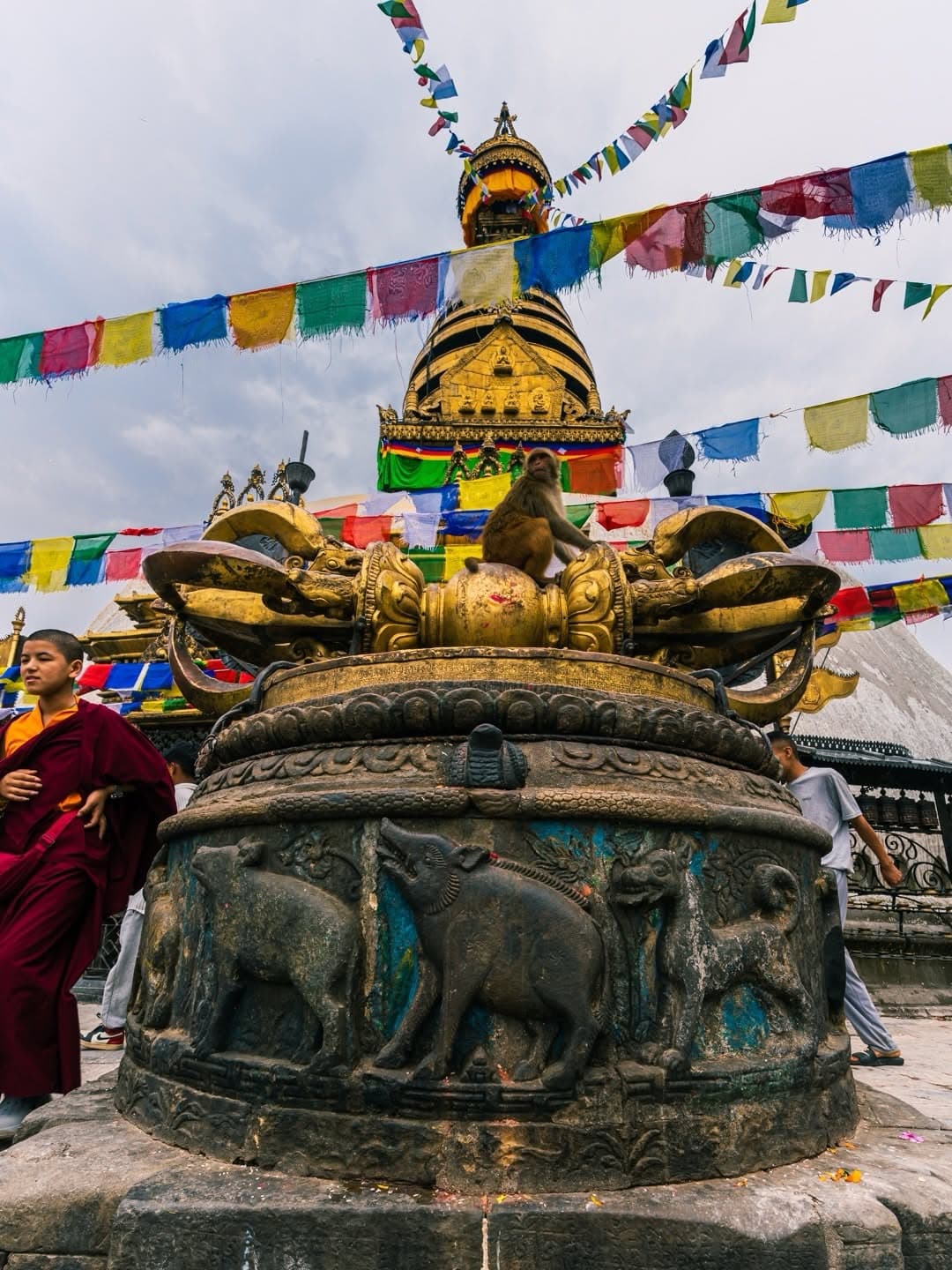
Our second day is for a sightseeing tour of several of the cultural UNESCO World Heritage Sites of Kathmandu city. This morning you will visit four of these incredible sites which will help you to understand the unique culture and heritage of Nepal. An expert city guide will guide us to sacred Hindu temples, Buddhist shrines and historical monuments. Swayambhunath, Kathmandu Durbar Square, Pashupatinath temple, Bouddhanath stupa and their amazingly detailed art and architecture are our center of attraction. Thereafter, Trekking Mart will organize a trek orientation program and also assist you on trekking preparation (equipment’s packing, etc).
Meals: Breakfast only
After early morning breakfast, we will transfer to the local airport and fly to Lukla. This 30 minutes scenic flight takes you over incredible Himalayan ranges, landscapes and remote mountain villages that cling to the sides of the mountains. At Lukla we’ll meet all crew members and begin your trek to Chutunga village. We will trek through the fields and forests passing Yak postures and teahouses to reach the Chutunga village. We will spend a night at Chutanga Village.
Note: Alternative way is drive to Ramechaap then fly to Lukla.
Meals: Breakfast, lunch and dinner
Acclimatization is needed because we want our high-altitude trek to be safe and successful. Relax and let our bodies adapt today to the higher altitude. We may wander around the Chutanga area, trek to Zetra La (4600 m), or walk through beautiful rhododendron forests. Besides the Himalayan pheasants that are active, the path also has scenic spots. Then, simply relax and enjoy the stunning mountain scenery. Stay overnight at Chutanga.
Meals: Breakfast, lunch and dinner
After morning breakfast, we continue our trek to Tuli Kharka. The trail climbs steeply over the Kalo Himal Ridge and crosses the Zetra La Pass. We will see the Dudh Koshi Valley, Karyolung, Lumding Himal, and the rolling landscapes from the pass. By crossing the pass, we move gently; the walk is steep and rocky terrain before gradually descending to Thuli Karka. Overnight stay at a local lodge.
Meals: Breakfast, lunch and dinner
Today will be one of the longest days of trekking as we go down from the high alpine area of Thuli Kharka to the beautiful and isolated Hinku Valley. It is a pristine wilderness created by the Hinku River that runs through the valley. Before the trail leads through the fields, rhododendron and bamboo forests, and along the charming Hinku River, we will see initial amazing views of our destination: Mera Peak. The trail is a wonderful mixture of quiet forest views and wild alpine scenery. Really, we arrive at the silent village of Tashing Ongma, where we stay in a simple lodge hidden in the forested mountains. A delightful place to spend the night.
Meals: Breakfast, lunch and dinner
After morning breakfast, we will continue upstream with the breathtaking vistas. The trail gradually ascends through the open meadows, yak-grazing pastures, and glacial landscapes with spectacular Mera Peak to the east and Mt Kusum Kangari to the west. As we enter Tangnag, we will begin to see the first close-up views of Mera Peak towering above the valley where we will stay overnight.
Meals: Breakfast, lunch and dinner
Today is another rest day for our bodies to recover and adjust to the high altitude while enjoying the amazing Himalayan views. We are rapidly gaining in elevation which means thinner and thinner air. We may take a short local hike in this wonderful setting, beautiful mountain serenity, glacial lakes, and all-around fresh air. The pristine nature of the area reflects the ultimate beauty of the Himalayas. These activities help us with altitude adaptation and make tomorrow's trek effortless. Overnight stay at Tangnag.
Meals: Breakfast, lunch and dinner
Today, we trek over the 5,000 m gradual uphill to Khare. The trail follows east of Tangnag along the side of the Dig glacier and passes the pristine Sabai Tsho glacial lake, offering breathtaking vistas of the surrounding glacial landscapes. We will arrive at Khare, where we enjoy the magnificent views of the north face of Mera Peak, Kusum Kanguru, Kyashar, and the Mera glacier spilling steeply down into the valley. Overnight at a local lodge.
Meals: Breakfast, lunch and dinner
Another rest day? Yes, as we are ascending higher and higher. At Khare, we take an acclimatization day to adjust to the high altitude and reduce the risk of altitude sickness. The best way to avoid Acute Mountain Sickness (AMS) is to allow the body 24 hours to adjust to the ever decreasing thin mountain air. TREKKING MART takes AMS seriously and we know the symptoms and how to best avoid it.
In the morning we head to Mera glacier where we practice rope work and use crampons and ice axes under the experts' guidance. So it’s not just a day of rest. There is also a climb to 5550m on a moraine ridge from where one can have splendid views of Mera La and other surrounding peaks. We will return to Khare for lunch. We’ll spend the afternoon resting for the upcoming climb. Overnight stay at Lodge.
Meals: Breakfast, lunch and dinner
Today we leave the Khare and slowly ascend up onto the Mera glacier. We will cross a long flat area on top of the glacier with snow and ice and reach the Mera La Pass. Along the way, we will enjoy the wonderful mountain views and have clear visibility of the summit route. At Mera La, we will spend the rest of the day resting and preparing for the trekking ahead. Overnight stay at a tented camp.
Meals: Breakfast, lunch and dinner
Today we are heading from Mera La up to Mera Base Camp. We experience a good feature of mountain trekking by crossing a large rocky outcrop, glacial terrain and snowy slopes with the amazing views of Everest, Makalu, Cho Oyu, Nuptse and Kanchenjunga. It is quite short but steep grade up, so we make it slowly in order to be safe with Acute Mountain Sickness (AMS). Finally, when we arrive at High Camp, enjoy the freshly cooked meal and stunning views of the Himalayas. Spend some time resting and getting used to the high altitude further.
Note: After lunch, our climbing guide will give a technical demonstration using climbing gear such as ice axes, climbing boots, crampons, harness and ascender, plus how to go up and down using ropes. We believe that this training session will enhance your confidence, giving you an increased chance to reach the summit.
Meals: Breakfast, lunch and dinner
Today is the climax of our trip as we are going to summit Mera Peak. Following an early morning breakfast, we start to climb the glacier and onto the peculiar ridge with all the mountaineering equipment. It takes 5-6 hours to reach the summit of Mera Peak. To reach the main summit, we descend the opposite side of the south summit and continue along the southern rim, which is sometimes corniced until it is possible to climb up and through the slope of the main summit. After reaching Mera Peak, it offers a magnificent view of Mt. Everest (8,848m) and Lhotse (8,516m) to the north, Cho Oyu (8,210m) to the northwest and Kanchenjunga (8,586m) and Makalu (8,481m). We will spend one of the greatest moments of a lifetime at the top and enjoy the breathtaking scenery of the surrounding high snowcapped peaks. Before 12 noon, we retrace our steps back to Mera La because after 12 PM high winds cause difficulties and onwards to Khare for an overnight stay.
Meals: Breakfast, lunch and dinner
It is a backup day when bad weather, high winds, or other unexpected things that could delay the summit. Trekking Mart always emphasizes safety over all else in the mountains and believe it helps to do everything in our power to have this extra day available in case we need to make adjustments for an extra day for someone to acclimate or recover. If everything goes as plan, this day will be skipped.
Meals: Breakfast, lunch and dinner
After the successful climbing of Mera Peak, we begin descending down to Kothe through the pristine Hinku Valley. The trail follows a landscape that transforms from snow-covered terrain to alpine meadows and forests. In Kothe, we will celebrate successfully summiting Mera Peak with local food and wine. Overnight stay at local lodge.
Meals: Breakfast, lunch and dinne
After morning breakfast, we will start our trek to Thuli Kharka. We will continue back through the lush forest on the west side of the Hinku valley. We reach Taktho by ascending and descending the routes and traversing different branches of the Inkhu Khola alongside the route we seen dense rhododendron and pine forests. We move descending towards the Thuli Kharka where we will stay overnight.
Meals: Breakfast, lunch and dinner
Today, we begin the last day of our trek. we return back to the Lukla Valley by passing over the Zetra La Pass. We will see stunning views of the Himalayan range from the the Zetra La Pass and descending down to the Chutanga and then an easy walk takes us to Lukla. Overnight at a local lodge.
Meals: Breakfast, lunch and dinner
Finally, a day with no trekking as we’ll take a scenic morning flight back to Kathmandu. Upon arrival, shift to hotel and spend rest of time on relaxation. Do some last-minute shopping. Stay overnight in Kathmandu.
Meals: Breakfast only
Our amazing journey comes to an end today. A company representative will pick you up from your hotel and drop you off at the airport 3 hours before our scheduled flight. Trekking Mart is your gateway to the world of adventure which includes not only Nepal, but Bhutan, Tibet, India and now with our affiliates in East Africa. Talk to us about future trips before you leave for your next destination.
Meals: Breakfast only
Include / Exclude
Service Included
- ✓
Airport pickup and drop off
- ✓
Day 2 Kathmandu guided city tour by car
- ✓
Hotel in Kathmandu with breakfast (We offer 3 to 5-Star luxury hotels)
- ✓
Meals (Breakfast, Lunch, Dinner) during the trek
- ✓
Lodge to lodge accommodation during the trek
- ✓
Trekking permits and National parks fees
- ✓
An experienced English-speaking trekking guide.
- ✓
Local porters to carry your baggage
- ✓
Staff food, accommodation, salary & insurance.
- ✓
Welcome dinner with cultural show.
- ✓
All governmental procedure
- ✓
Applicable Taxes
- ✓
Rescue arrangement in case of emergency
- ✓
Service Excluded
- ✘
International flight (If you need, we are happy to assist you on it).
- ✘
Nepal visa fee
- ✘
Travel Insurance
- ✘
Lunch & dinner other than mentioned
- ✘
Bar and laundry bills
- ✘
Emergency rescue/evacuation costs
- ✘
Tips for guide & porter
4.9 ★★★★★
Tripadvisor reviews
Activity
Climbing & Trekking
Duration
19 Days
Grade
Difficult Plus
Essential Information
We've compiled some of our Frequently Asked Questions to help you learn more about this amazing trip.
All travelers (except Indian nationals) must have a passport valid for at least six months from the date of arrival in Nepal.
Tourist visas are available:
On arrival at Tribhuvan International Airport
At major land border immigration offices
At Nepali embassies and consulates abroad
Travel insurance is strongly recommended, especially for trekking and climbing activities. Your insurance should cover emergency medical treatment and evacuation. Although it is possible to travel without insurance, Trekking Mart requires a written declaration stating that you accept full responsibility if you choose not to have coverage.
The climate of Nepal is largely influenced by the monsoon season, resulting in distinct travel periods throughout the year:
Dry Season: October to May
Monsoon Season: June to September
The best times to visit are October–November and March–May, when Himalayan views are at their clearest and the landscapes are especially vibrant. From February to May, warmer temperatures make high-altitude trekking more comfortable and enjoyable.
Trekking in Nepal requires a good level of physical fitness, as it involves long walking hours on uneven, and often steep, terrain.
To prepare for your trek, the following are recommended:
Regular physical exercise (walking, hiking, cardio training)
Participation in sports or endurance activities
Yoga or flexibility training
It is also advisable to consult your physician for a full medical check-up prior to travel to ensure you are fit for trekking.
No vaccinations are mandatory for entry into Nepal. However, travelers may consider the following vaccinations based on personal health needs, travel plans, and medical advice:
Cholera
Meningitis
Tetanus
Diphtheria
Typhoid
Gamma Globulin (for short-term protection against certain infections, such as hepatitis A)
It is recommended to consult a healthcare professional or travel clinic before your trip to determine which vaccinations are appropriate for you.
All Trekking Mart trek leaders are trained in first aid and carry essential medical equipment. However, clients are strongly advised to bring a personal first-aid kit to handle minor health issues during the trek.
Suggested Items:
Pain relief medication (e.g., Aspirin or Panadol)
Antihistamines for allergies
Medication for stomach upsets (e.g., Imodium)
Oral rehydration salts
Antiseptic cream and antibiotic powder
Water purification tablets
Throat lozenges
Eye drops
Antacid tablets
Calamine lotion (for skin irritation or insect bites)
Bandages and plasters
Small scissors and tweezers
ATMs are widely available in Kathmandu and other major towns. Credit cards are accepted in most hotels, restaurants, and shops in tourist areas, though smaller establishments may prefer cash.
Currency exchange services are available at Tribhuvan International Airport and throughout Kathmandu, including banks and licensed exchange counters.
When trekking in remote areas, ATMs and card facilities are often unavailable. Therefore, it is recommended to carry sufficient cash (in Nepalese Rupees) to cover:
Personal expenses
Extra meals and beverages
Tips and gratuities
Additional accommodation if required
Additional Tips
Withdraw or exchange money before starting your trek.
Carry small denominations for convenience in remote areas.
Inform your bank before traveling to avoid issues with card usage abroad.
Your safety is our highest priority. Trekking Mart guides are trained and experienced, and they have full authority to modify, cancel, or reroute any part of the itinerary if necessary, due to safety concerns, weather conditions, or other unforeseen circumstances.
While every effort is made to complete all trips as planned, conditions in the mountains can be unpredictable. Therefore, a flexible attitude and cooperation from all participants are essential to ensure a safe and enjoyable trekking experience.