Everest Three High Pass Trekking - 20 Days
 Fullscreen
4.9 ★★★★★
Tripadvisor reviews
Activity
Trekking
Duration
20 Days

Grade
Difficult Plus
Overview
Most people who come on a trek to the Khumbu region only reach Everest Base Camp following the same, traditional path. But why not take the path less traveled? Trekking Mart is pleased to offer you the unique EBC Three High Pass Trek that is indeed the path less traveled. If you are looking for something different beyond the main trail, this trek is for you. If you love seeing local culture and meeting the local people, the Everest Three High Pass Trek will provide that.
This Everest Three High Pass Trek takes you over three high passes, each above 5300 meters. You cross Kongmo La (5365 m) as the sun rises over Mt. Makalu (5th highest mountain in the world). Ascend up the steep icy ridge over Cho-La (5420 m), and down to the quiet and stillness of Gokyo Lake in the incredibly picturesque Gokyo Valley. And finally, you reach Renjo-La (5360 m), where Everest, Lhotse, and Makalu appear on the horizon together in full Himalayan splendor. The site of these massive peaks is breathtaking as you behold their majesty before you.
Along the way, you will pass through Sherpa villages, colorful Buddhist monasteries, Mani walls, and quaint tea houses with yak herders joining you for a cup of tea. You will spend nights at high altitudes, breathing the freshest of mountain air.
It is a demanding route—roughly magnificent 20 days at significant altitudes. There are no shortcuts on this amazing trek. But it rewards you with a version of the Everest region that most visitors never experience.
Highlights of the Trip
Cross the three high beautiful passes of the Khumbu region.
Panoramic view of Everest from Mt. Kala Pathar (5555 m)
Reach Everest Base Camp (5364 m)
Cross the Gokyo Ri
Visit tranquil Gokyo Lake in the pristine Gokyo Valley
Prayer wheels, flags, mani stones, suspension bridges
Explore the culture and lifestyle of the local Sherpa people
Panoramic views of other mountains like Lhotse, Ama Dablam, Nuptse, and many others
Itinerary
After arrival at the Tribhuvan International Airport (TIA) in Kathmandu, a Trekking Mart staff will pick you up from the airport and take to our hotel. In the evening, immerse yourself in Nepal’s vibrant culture. You’ll be treated to authentic Nepali cuisine and cultural dance performance to experience the country’s distinct spirit.
Meals: Dinner only
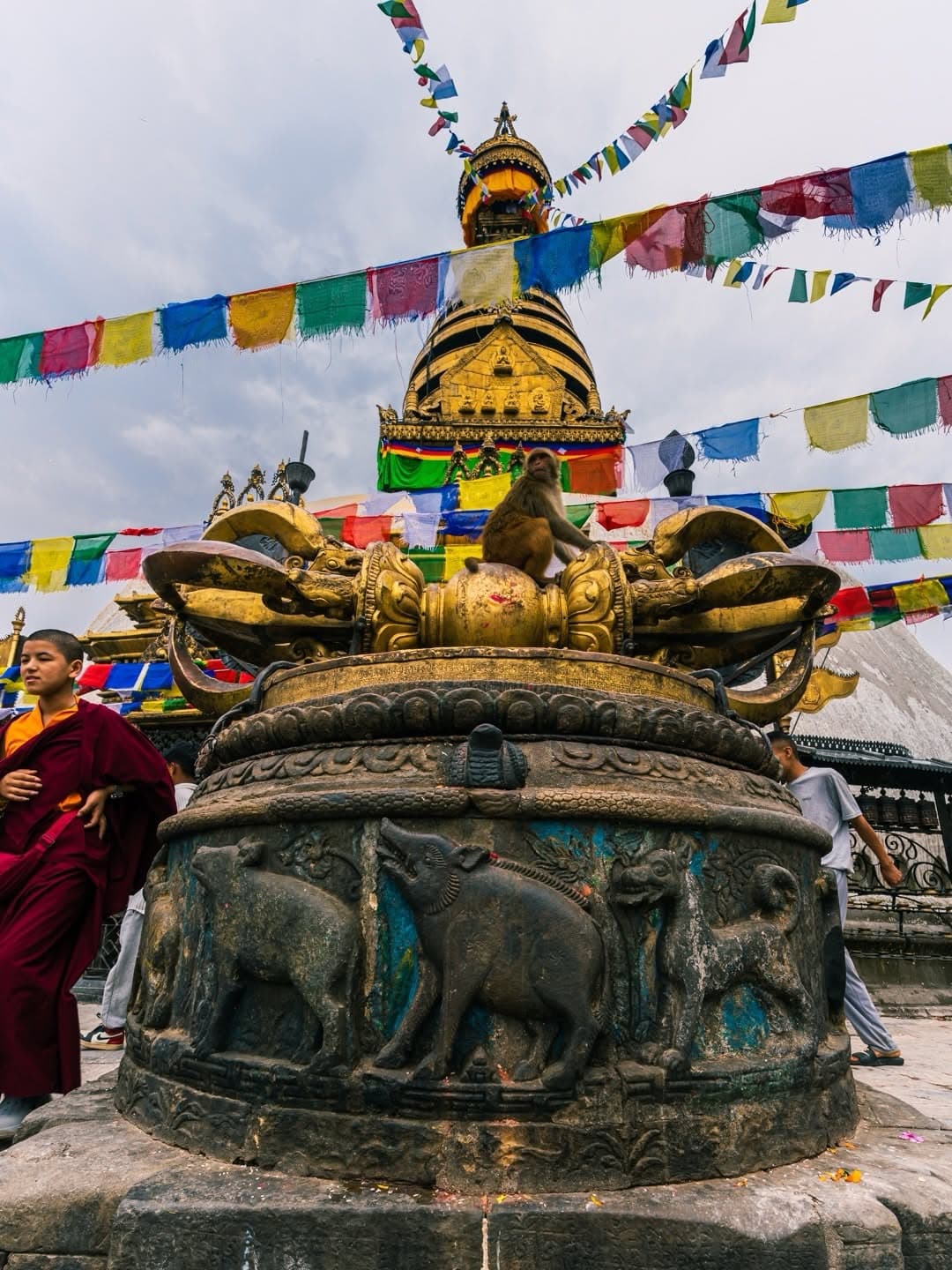
Our second day features an easy tour of several of the many cultural UNESCO World Heritage Sites in the Kathmandu Valley. After breakfast, a Trekking Mart city guide will take you to four UNESCO World Heritage sites, including Swayambhunath (Monkey Temple), Pashupatinath, Boudhanath, and Patan Durbar Square. After completing our tour in the afternoon, we will prepare for the trek by checking our gear, backpacking, reviewing the next day's itinerary, and making final preparations for the entire trek.
Meals: Meal included: Breakfast only
The flight is from Ramechhap Airport. It is a 4-hour drive from Kathmandu. At other times, flights are from Kathmandu to Lukla. We get fantastic views of the mountains, including Mt Everest, as we enter the deep gorge of the Dudh Kosi valley.
We begin our short trek to Phakding immediately after landing. At one hour’s gradual descent, we will be at a Cheplung village from where we have a glimpse of Mt. Khumbila (18900ft), a sacred mountain which has never been climbed. From Cheplung, we continue descending to Phakding and spend the night.
Meals: Breakfast only
We begin our trek on uphill and downhill trails with multiple crossings over Dudh Koshi River and a magnificent view of Mt. Thamserku (6,608m) from the Benkar village. We cross more bridges and reach the entrance of Sagarmatha National Park at Monjo, where our trekking permits are checked. We walk furthermore and pass through Jorsale village before reaching Namche Bazaar. From here, we get beautiful views of the Himalayas including Everest, Lhotse, Tawache and others. Overnight in Namche Bazaar.
Meals: Breakfast, lunch and dinner
This is the first of the three scheduled rest days which will help us acclimatize to the high altitude. Since experts believe that it is better to stay active even during rest days for better trekking experience, we are going to spend the day enjoying small hikes in and around Namche Bazaar. We hike up to Everest View Hotel to enjoy admirable views of the Himalayan vista. On our way back to Namche, we also tour the Khumjung Monastery (houses a yeti scalp!) and Hillary School. Our guide can also take us to the Tourist Visitor Center near the headquarter of the Sagarmatha National Park where we can observe an assortment of things related to the first Everest ascenders, Sherpa culture and learn about the various plant and animal life in the Everest region. Overnight in Namche Bazaar.
Meals: Breakfast, lunch and dinner
We begin today’s trek on an easy trail to Phunki Thanga. From here we ascend towards Tengboche village which is home to the largest monastery in the Everest region. The monastery is located within the Sagarmatha National Park and provides panoramic views of the highest mountains on earth including Everest, Ama Dablam, Thamserku, Nuptse and Lhotse. We try to reach the monastery by 3:00 in the afternoon and may even be able to witness a religious Buddhist ceremony. Overnight in Tengboche.
Meals: Breakfast, lunch and dinner
We begin today’s trek by walking downhill and pass-through lush forests filled with birch, conifers and rhododendron trees. We continue our trek with views of Mt. Everest, Lhotse and Ama Dablam to keep us company. The picturesque trail dips down to Debuche, crosses the Imja River and takes us to Pangboche. While walking the upper Pangboche trails, we get a more pristine view of the Himalayas and Pangboche Monastery. We move ahead towards the Imja Valley, Lobuche River and ultimately climb up to Dingboche. The village is a beautiful windy settlement overlooked by chortens and prayer flags. Overnight in Dingboche.
Meals: Breakfast, lunch and dinner
Dingboche is a popular stop for trekkers and climbers headed to Mt. Everest, Ama Dablam or Imja Tse (6,812m). The village is beautiful with an array of fields enclosed by stone walls to protect barley, buckwheat and potatoes from the cold wind and grazing animals. We spend a day at Dingboche for acclimatization. We take a day hike to Nagarjun Hill for great views of Makalu, Lhotse, Chalotse, Tawache, Ama Dablam and others.
Meals: Breakfast, lunch and dinner
Our trail passes through stone-walled fields and Imja Khola valley before entering glacier moraines amidst towering Himalayas. The trail continues to Bibre which is a yak herdsman place. From here, directly across the valley is the fantastic Ama Dablam and the Amphu Labsa mountains. The trail ahead is intersected by icy streams. We continue our walk for around half an hour and reach Chhukung. After lunch, we begin our trek towards Chhukung Ri. The climb to Chhukung Ri involves some easy scrambling near the summit. From the top, we can look directly across the valley for a fantastic view of Ama Dablam and Amphu Labcha peaks. We descend back to Chhukung to spend the night.
Meals: Breakfast, lunch and dinner
We begin today’s trek very early in the morning to reach the highest part of the entire trip which is Kongma La pass. We can either take a trail over a hill which is to the northwest of Chhukung over the Nuptse Glacier moraines or we can walk back to Bibre and trek on the trail above the Niyang Khola. The top of the pass is marked by cairns and Buddhist prayer flags. The final descent from the pass is the most difficult part of today’s journey. After climbing the moraine on the far side, the trail turns north through Khumbu Glacier which takes us to Lobuche. Overnight at Lobuche.
Note: Trekking through Kongma La is optional. If we do not want to tackle the strenuous Kongma La pass today and want to go directly to Lobuche from Chhukung, we can do that too.
Meals: Breakfast, lunch and dinner
Our trail moves along the lateral moraine of the Khumbu Glacier. Ahead on the trail we see the crest of the north ridge of Everest along with Pumori, Mahalangur, Lingtern, Khumbutse, Nuptse and other mountains. A small ascent takes us to Thangma Riju. From here we admire panoramic views of the Himalayan vista. We ascend on a steep trail up to the top of Changri Glacier. As we reach Gorak Shep, we are surrounded by the Himalayas. After resting for a short while, we continue to Everest Base Camp. We pass through rocky dunes, moraines and streams before reaching the base camp of the world’s tallest mountain, Everest. From here we admire Nuptse, Khumbuste and Pumori mountains. We trek back to Gorak Shep and spend the night. Alternatively, we can visit Kala Patthar today instead of the next day as many believe that the sunset view from Kala Patthar is more stunning than the sunrise view.
Meals: Breakfast, lunch and dinner.
We start our trek to Kala Patthar early in the morning in order to catch remarkable views of the first light of the sun shining on Mt. Everest. However, we need to be prepared for trekking in the dark and cold temperature (the temperature varies according to the season). Furthermore, there is always a chance for chilly winds which are quite common. As we continue our trek, familiar peaks such as Lingtren, Khumbutse, Changtse, Everest and Nuptse tower above us. After several hours of ascent, we will be on the top of Kala Patthar. The close-up view of Mt. Everest and other Himalayan peaks from Kalapathar is amazing. We enjoy the stunning Himalayan vista and descend to Lobuche where we stay the night.
Those participants who will visit Everest Base Camp today will have an early breakfast to start early as Everest base camp hike takes longer than the hike to Kala Patthar. After returning to Gorak Shep, both the groups will have lunch together.
Meals: Breakfast, lunch and dinner
From Lobuche we trek downhill on a trail alongside the Khumbu Glacier. Our trail splits into two and we choose the trail on our right. On the way we can better admire the view of the looming Awi Peak. We pass through a stupa and tombstones in the distance. After walking for a while we begin to ascend. During the ascent, we see Chola Tsho Lake nearby. We continue further and pass another lake which is lot smaller than the Chola Tsho Lake. We cross the Chola Khola on a bridge before reaching Dzongla. Overnight in Dzongla.
Meals: Breakfast, lunch and dinner
As we gain height, the Cho La Lake begins to appear, and the Ama Dablam presides over a range of mountains on the south and Cholatse soars on the west. Climbing the incline is not easy; it is steep but made worse by boulders over some of which we will have to scramble. The final climb to the Cho La can be a little tricky as the trail curves round a crevasse. The top of the pass is marked by prayer flags and cairns. Scenery of majestic peaks on all directions is breathtaking. Although long, the path leading down to Thangnak is not difficult. Our trail brings us to the edge of the Ngozumpa glacier, which is the longest glacier in Nepal. Reaching the other side of the glacier, we see the second Gokyo Lake on the series of six lakes. A short distance away is the third Gokyo Lake. On the edge of this lake stands the Gokyo Village where we spend the night.
Meals: Breakfast, lunch and dinner
We climb Gokyo Ri today and enjoy views of the incredible mountain vista. We can also tour the fourth Gokyo Lake today which is only 3km north of the Gokyo Village. Next, continue trekking to the 5th lake. The view from ‘Scoundrel's Viewpoint’, located at the edge of the 5th lake, is astonishing. Cho-Oyu, Gyachung Kang, Everest, Lhotse, Nuptse, and Makulu mountains and the huge Ngozumba Glacier are ours to admire. We trek back to Gokyo and spend the night.
Meals: Breakfast, lunch and dinner
We start the day early in the morning to complete the long day’s trek ahead. Our trail moves alongside Dudh Pokhari (lake) for a while. We walk for around two hours before descending towards the Renjo La pass. On the way we are rewarded with extravagant views of the Himalayan and Rolwaling ranges and others. Views from the Renjo La pass are much like that from Gokyo Ri with the third Gokyo Lake and Gokyo Village beneath the gray smear of the Ngozumpa Glacier. We also get outstanding views of Mt. Everest from the top of the pass. Continuing on from the pass, our trail winds down a stone staircase and then moves over a loose scree to reach the south bank of Angladumba Tsho Lake. The prescence of ice on the trail while descending down can make our descent a bit hazardous. Along the way we see Relama Tsho and Renjo Lake. We walk down a narrow valley clogged with giant boulders to Lumde where there is a support lodge, but it is often closed. We walk almost for an hour from Lumde to get to Marlung on the east bank of the Bhote Koshi River. Overnight at Marlung.
Meals: Breakfast, lunch and dinner
The descent from Marulung to Thame follows a traditional route used for centuries by the Tibetan traders. We cross the Bhote Koshi River and descend to Taranga. The trail continues to descend and we cross two bridges before reaching Thame. Overlooking Thame is its famous Gompa situated on a hill to the west. From here, we descend gradually on a trail that passes through a few small villages before reaching Namche Bazaar which is probably the biggest town in the Everest region. Overnight in Namche Bazaar
Meals: Breakfast, lunch and dinner
We begin our trek with a descent. As we continue our trek, we cross several bridges over the fast-flowing Dudh Koshi River and its tributaries. Now the trail has become more level and natural. On our trek we enjoy walking on open plains, through rhododendron and pine forests and enjoy distant views of the snow-covered peaks. We walk through Sherpa villages noticing their impressive faith in Buddhism and the culture of prayer stones and prayer flags. After reaching Lukla, we stretch those sore legs and recall the experiences of the last couple of weeks. Our long trek to the mountain and its high passes ends today. Overnight in Lukla.
Meals: Breakfast, lunch and dinner
Today is the final day, and we will be back in Kathmandu. The airport is a five-minute walk from your guest house. After reaching Kathmandu, your guide will drop you off at your hotel and say goodbye. If you have more time in Nepal, please ask us to arrange the rest of your time. Overnight in Kathmandu.
Meals: Breakfast only
Our amazing journey in the Everest region including that to the base camp of Mt. Everest and crossing high passes come to an end today. A Trekking mart's representative will pick you up from your hotel and drop you off at the airport 3 hours before our scheduled flight. Trekking Mart wishes you a safe journey ahead and hopes you depart with unforgettable memories of the Himalayas.
Meals: Breakfast only
Include / Exclude
Service Included
- ✓
Airport pickup and drop off
- ✓
Ramechhap-Lukla-Ramechhap flights
- ✓
Day 2 Kathmandu guided city tour by car
- ✓
Hotel in Kathmandu with breakfast
- ✓
(We offer 3 to 5-Star luxury hotels)
- ✓
Meals (Breakfast, Lunch, Dinner) during the trek
- ✓
Lodge to lodge accommodation during the trek
- ✓
Trekking permits and National parks fees
- ✓
An experienced English-speaking trekking guide.
- ✓
Local porters to carry your baggage
- ✓
Staff food, accommodation, salary & insurance.
- ✓
Welcome dinner with cultural show.
- ✓
All governmental procedure
- ✓
Applicable Taxes
- ✓
Rescue arrangement in case of emergency
Service Excluded
- ✘
International flight (If you need, we are happy to assist you on it).
- ✘
Nepal visa fee
- ✘
Travel Insurance
- ✘
Lunch & dinner other than mentioned
- ✘
Bar and laundry bills
- ✘
Emergency rescue/evacuation costs
- ✘
Tips for guide & porter
Trip Resources
View the trekking route map and itinerary.
4.9 ★★★★★
Tripadvisor reviews
Activity
Trekking
Duration
20 Days
Grade
Difficult Plus
Essential Information
We've compiled some of our Frequently Asked Questions to help you learn more about this amazing trip.
All travelers (except Indian nationals) must have a passport valid for at least six months from the date of arrival in Nepal.
Tourist visas are available:
On arrival at Tribhuvan International Airport
At major land border immigration offices
At Nepali embassies and consulates abroad
Travel insurance is strongly recommended, especially for trekking and climbing activities. Your insurance should cover emergency medical treatment and evacuation. Although it is possible to travel without insurance, Trekking Mart requires a written declaration stating that you accept full responsibility if you choose not to have coverage.
The climate of Nepal is largely influenced by the monsoon season, resulting in distinct travel periods throughout the year:
Dry Season: October to May
Monsoon Season: June to September
The best times to visit are October–November and March–May, when Himalayan views are at their clearest and the landscapes are especially vibrant. From February to May, warmer temperatures make high-altitude trekking more comfortable and enjoyable.
Trekking in Nepal requires a good level of physical fitness, as it involves long walking hours on uneven, and often steep, terrain.
To prepare for your trek, the following are recommended:
Regular physical exercise (walking, hiking, cardio training)
Participation in sports or endurance activities
Yoga or flexibility training
It is also advisable to consult your physician for a full medical check-up prior to travel to ensure you are fit for trekking.
No vaccinations are mandatory for entry into Nepal. However, travelers may consider the following vaccinations based on personal health needs, travel plans, and medical advice:
Cholera
Meningitis
Tetanus
Diphtheria
Typhoid
Gamma Globulin (for short-term protection against certain infections, such as hepatitis A)
It is recommended to consult a healthcare professional or travel clinic before your trip to determine which vaccinations are appropriate for you.
All Trekking Mart trek leaders are trained in first aid and carry essential medical equipment. However, clients are strongly advised to bring a personal first-aid kit to handle minor health issues during the trek.
Suggested Items:
Pain relief medication (e.g., Aspirin or Panadol)
Antihistamines for allergies
Medication for stomach upsets (e.g., Imodium)
Oral rehydration salts
Antiseptic cream and antibiotic powder
Water purification tablets
Throat lozenges
Eye drops
Antacid tablets
Calamine lotion (for skin irritation or insect bites)
Bandages and plasters
Small scissors and tweezers
ATMs are widely available in Kathmandu and other major towns. Credit cards are accepted in most hotels, restaurants, and shops in tourist areas, though smaller establishments may prefer cash.
Currency exchange services are available at Tribhuvan International Airport and throughout Kathmandu, including banks and licensed exchange counters.
When trekking in remote areas, ATMs and card facilities are often unavailable. Therefore, it is recommended to carry sufficient cash (in Nepalese Rupees) to cover:
Personal expenses
Extra meals and beverages
Tips and gratuities
Additional accommodation if required
Additional Tips
Withdraw or exchange money before starting your trek.
Carry small denominations for convenience in remote areas.
Inform your bank before traveling to avoid issues with card usage abroad.
Your safety is our highest priority. Trekking Mart guides are trained and experienced, and they have full authority to modify, cancel, or reroute any part of the itinerary, if necessary, due to safety concerns, weather conditions, or other unforeseen circumstances.
While every effort is made to complete all trips as planned, conditions in the mountains can be unpredictable. Therefore, a flexible attitude and cooperation from all participants are essential to ensure a safe and enjoyable trekking experience.