Everest Two High Pass Trekking - 18 Days
 Fullscreen
4.9 ★★★★★
Tripadvisor reviews
Activity
Trekking
Duration
18 Days

Grade
Difficult
Overview
The Everest Two Pass Trek is an exciting high-altitude experience that involves crossing two beautiful Himalayan passes of Cho La (5,420 m) and Renjo La (5,360 m), which affords you spectacular views of the world's highest peaks such as Mount Everest (8,848.86m), Lhotse (8,516m), and Cho Oyu (8,210m). Besides this magnificent view, you also encounter peaceful alpine lakes, glacial valleys, and traditional Sherpa villages. You will immerse yourself in the authentic Himalayan culture as its wonderful hospitality is revealed. With breathtaking views, isolated landscapes, and deeply enriching cultural experiences, the Everest Two High Pass Trek is a perfect one for experienced adventurers who desire the spectacular natural setting as well as the thrill of high-altitude while getting away from all the tourists. Trekking Mart is pleased to offer this unique trek with professional guides who know the culture as well as the journey to places less traveled.
Highlights of the Trip
Visiting UNESCO World Heritage Sites
Spectacular views of Mt. Everest and the surrounding high peaks.
Unique Sherpa culture of the region.
Behold the beautiful Gokyo Lakes with their tranquil blue waters that reflect the Himalaya skies.
Tour amazing Buddhist monasteries that reflect Mahayana Buddhism of Tibet.
Cross two high passes for incredible views of the world’s highest mountains.
See Everest Base Camp
Take the path less traveled where you encounter yaks and Sherpa people rather than crowds of tourists.
Itinerary
Trekking Mart will meet you outside the arrivals area of Tribhuvan International Airport in Kathmandu and will transfer you to your selected hotel. The rest of the day can be spent at leisure. We are sure you will want to rest from your long flight. Still, the excitement of being in the fabled city of Kathmandu may be your siren call to adventure today. In the evening you will enjoy a welcome dinner at a traditional Nepali restaurant, where you can enjoy delicious and authentic Nepali food, followed by a cultural dance show.
Meals: Dinner only
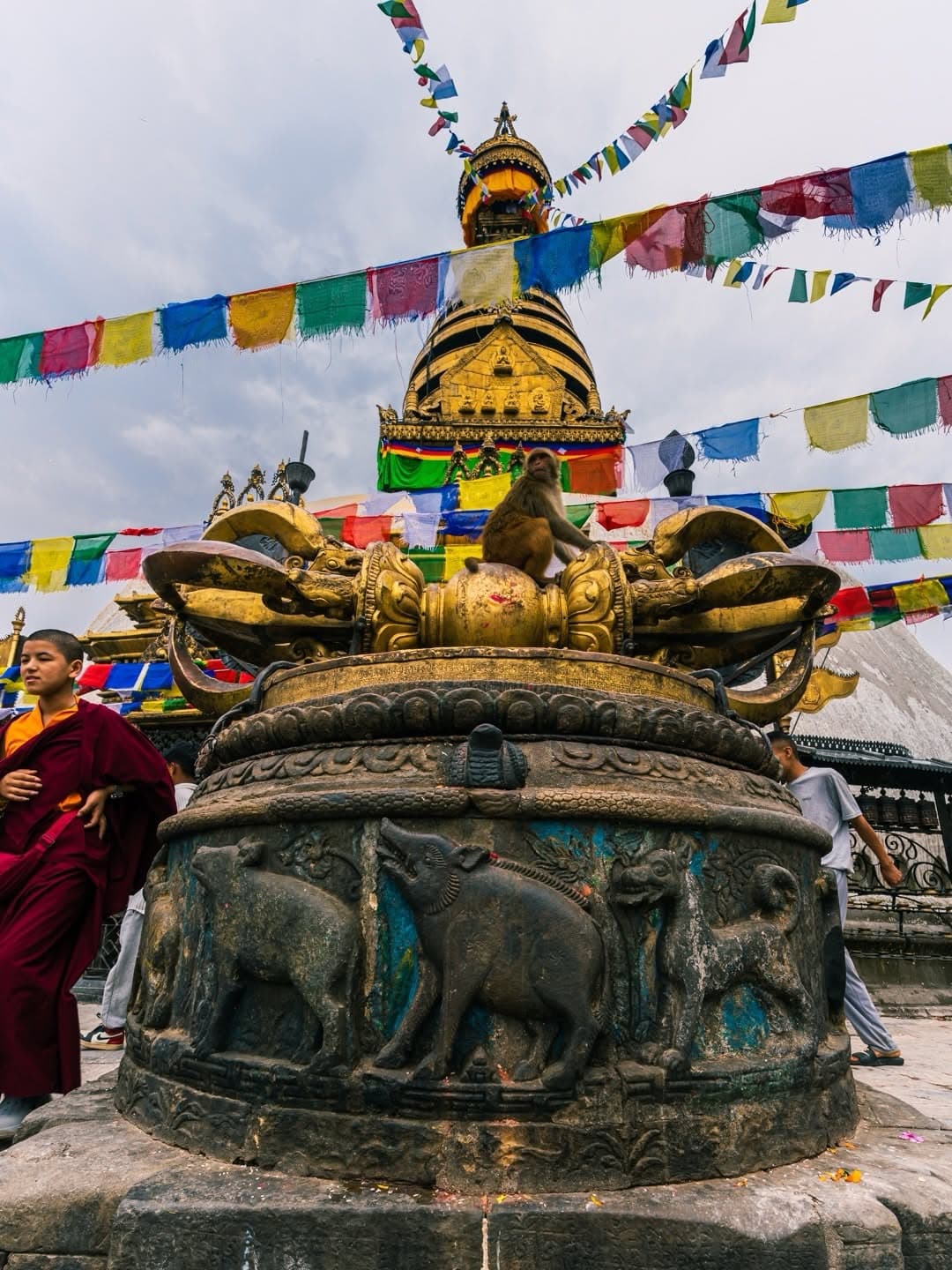
Our second day is for a sightseeing tour to several of the cultural UNESCO world heritage sites of the Kathmandu Valley. A Trekking Mart expert city guide will guide us to sacred Hindu temples, Buddhist shrines and historical monuments as you become acquainted with Nepalese culture and traditions. We visit four of the seven UNESCO World Heritage Sites in the Kathmandu Valley: Swayambhunath, Kathmandu Durbar Square, Pashupatinath Temple, Boudhanath Stupa and admire their extreme art and architecture are our attractions. Thereafter, Trekking Mart will organize a trek orientation program and a assist you on trekking preparation (equipment’s packing, etc).
Meals: Breakfast only
After early morning breakfast, transfer to airport and fly to Lukla. This is a 30 minutes scenic flight over incredible Himalayan ranges as you gaze down at outstanding landscapes and traditional villages. At Lukla you’ll meet all crew members and begin trek northward to Phakding village. It’s about a three hour walk through dense forests and over fast flowing mountain streams. Phakding is the perfect place to rest for the night.
Note: Alternative way is drive to Ramechaap then then fly to Lukla.
Meals: Breakfast, lunch and dinner
Today's trek is longer, taking about 5-6 hours. Walk through pine forests leading along Dudh Koshi River and crossing over a series of suspension bridges. After a steep climb over Chhutara, we’ll get to see your first view of Mt. Everest (8,848m) over the Lhotse-Nuptse ridge. We reach to Namche Bazaar for overnight rest.
Meals: Breakfast, lunch and dinner
Today we take a day rest at the Sherpa capital of Namche Bazaar. We take a day in order to acclimatize our body with elevation. By now you have already noticed the thinner mountain air If you are interested, hike to khumjung village (3,786m) to explore monasteries and local Sherpa villages. Namche Bazaar itself is a vibrant town with some modern facilities. There are restaurants, gift shops with local crafts, a bakery, Sherpa museum and even an ATM machine. Enjoy your visit around and stay overnight.
Meals: Breakfast, lunch and dinner
From Namche Bazaar we start climbing on the trail. On the way enjoy close up views of Ama-Dablam, Nuptse, and Everest. These comprise some of the highest peaks in the world. We want to arrive in the village of Tengboche before 3 pm in order to visit the monastery. The Tengoche Monastery is the biggest Buddhist monastery in the Khumbu region and is famous for its rich art. We can visit the monastery to witness the ceremonies of the Monks of the Everest region. The monks are most welcoming of visitors and will allow you to participate in Mahayana Buddhist worship.
Meals: Breakfast, lunch and dinner
The monastery at Tengboche is most impressive as the morning sunrise reflects off the mountains and illuminates this ancient edifice. These monasteries are places frozen in time that truly reflect the religious culture and life of the region. Today's journey takes us to the upper trail which offers the best photographic views of the monastery as well as the snowcapped peaks. The trail will pass chhortens and Mani walls as it makes its way through small villages. After lunch, the trail is moderate as it enters the Imja Valley. We descend down to the Lobouche River and finally climb a steep trail to Dingboche where we will spend two nights.
Meals: Breakfast, lunch and dinner
Today will be rest day at Dingboche (4,410m) to allow body to adjust to the altitude. To prevent Acute Mountain Sickness (AMS), we need to stop and take another rest day. You can already feel that the air is even thinner in Dingboche.
Rather than taking a full rest, you will do a short walk to Nangkartshang Peak to help with the acclimatization process and also to see some beautiful views of the wonderous snowcapped peaks. From the lookout, you can see amazing views of Ama Dablam, Lhotse, and other Himalayan mountains. After you have taken some time to roam around and take photographs, go down to Dingboche for your lunch and spend a quiet afternoon, getting ready for the next phase of the trek. Dingboche is a pleasant village and there are plenty of things to do and see as all visitors stop here for two nights. There is even a pool table which is proclaimed the world’s highest pool table in Dingboche.
Meals: Breakfast, lunch and dinner
The beautiful Khumbu valley is absolutely awesome, and we are going to trek through it today. Along the way, you will pass yak pastures, glacial streams, and the memorial at the Thukla Pass that commemorates those who have lost their lives attempting to climb Mt. Everest. While thousands of people have successfully climbed the world’s highest mountain, it is still a dangerous adventure and some sadly don’t make it. The memorial reminds us of those who passed away while climbing this massive mountain.
Take in spectacular views of Pumori, Nuptse, and the Khumbu Glacier. Hike along moraine slopes amidst breathtaking Himalayan peaks and quaint stone villages. Lobuche is a small, picturesque village where we will spend the night.
Meals: Breakfast, lunch and dinner
Mt. Everest finally comes back in view today as you will see the north ridge of the mountain while continuing the trek over first the Khumbu Glacier and later the Changri Glacier where the latter offers a 360° view of the Himalayas. The trail continues to Everest Base Camp (5,364 m). There is no place to stay at Everest Base Camp, so we return to Gorak Shep for overnight.
Meals: Breakfast, lunch and dinner
We begin before dawn for an inspiring view of sunrise over Mt. Everest as the morning rays of the rising sun hit the snowcapped peak. Mornings are cold (-10° to -14° C) with even colder winds that are always ever present. The climb to the top of Mt. Kala Patthar is well worth it. This mountain is considered a trekking peak which means there is no specialized equipment required to climb. The view from its summit more than compensates for any discomfort from the cold winds off the snowcapped peaks. It is from there that we can see Mt. Everest in all its amazing glory. We will return to Gorak Shep for breakfast. The trek today is from Gorak Shep to Dzongla where we spend the night.
Meals: Breakfast, lunch and dinner
Today we cross the first of the mountain passes at Cho La Pass. This is definitely a highlight of this trip as we cross an elevation of 5,367 meters. From on top we can see both the Everest region as well as get our first glimpses of the famed Gokyo valley and its surrounding mountains. The pass is steep but not difficult. It will involve walking on the glacier. It is a good idea to pack a pair of good sunglasses to protect your eyes from the blinding sun off the icy glacier. Tonight we will stay at Thaknak village.
Meals: Breakfast, lunch and dinner
Trek from Thaknak through a pristine, scenic valley. We cross glacial streams and moraine ridges. Pass yak grazing areas and small stone settlements while enjoying stunning views of surrounding peaks, including Cho Oyu and Gyachung Kang. We probably will see yaks grazing. These are the heartiest of the bovine world that can handle the cold temperatures of the region. Yaks provide milk, butter, wool and meat while also carrying heavy loads across the mountain paths. It’s a gradually ascend to reach the village of Gokyo.
Meals: Breakfast, lunch and dinner
In early morning Gokyo Ri summit (5,360 m) is the perfect viewpoint where you can see the majestic Himalayas including Mount Everest, Cho Oyu, and the transquil blue surface of the Gokyo Lakes. After enjoying the breathtaking views, descend and take the path leading to the challenging Renjo-La Pass (5,360 m), where you'll be traversing rocky ridges and high-altitude areas. Carefully go down to the valley and get to the village of Lungden.
Meals: Breakfast, lunch and dinner
Today’s trek begins through the lower Khumbu region's beautiful rhododendron and pine forests. Cross the suspension bridges over the rushing mountain rivers and see small Sherpa villages along the trail, giving you a glimpse of their unique lifestyle and culture. We return today to the main village of Namche Bazaar, the lively Sherpas center for living and trading. Trekkers are able to purchase goods from the local markets, enjoy a variety of wonderful foods, and behold the beautiful scenery of the Himalayas at their best.
Meals: Breakfast, lunch and dinner.
This is the final day of trekking as you make your way to the airport at Lukla. You continue your descent, passing through mountain forests and Sherpa villages. You know this area, but we are traveling the opposite direction now. We will spend a night in Lukla where we meet other trekkers to share stories and enjoy good food.
Meals: Breakfast, lunch and dinner.
Finally, a day with no trekking as we’ll take a scenic morning flight back to Kathmandu. Upon arrival, shift to hotel and spend rest of time relaxing. Today is a good time to some last-minute shopping for souvenirs. We check into our hotel in Kathmandu.
Meals: Breakfast only
Today, you will depart for home after having an 18-day journey of a lifetime. Trekking Mart will take you to the airport about 3 hours prior to your flight time. Before you leave, be sure to talk to your friends at Trekking Mart about other adventures in both the Himalayas and beyond. Trekking Mart is your gateway to the world as we offer trips to Bhutan, Tibet, India and now safari opportunities in East Africa. We wish you a safe trip to your next destination and look forward to serving you again.
Meals: Breakfast only
Include / Exclude
Service Included
- ✓
Airport pickup and drop off
- ✓
Kathmandu-Lukla-Kathmandu flights
- ✓
Day 2 Kathmandu guided city tour by car
- ✓
Hotel in Kathmandu with breakfast (We offer 3 to 5-Star luxury hotels)
- ✓
Meals (Breakfast, Lunch, Dinner) during the trek
- ✓
Lodge to lodge accommodation during the trek
- ✓
Trekking permits and National parks fees
- ✓
An experienced English-speaking trekking guide.
- ✓
Local porters to carry your baggage
- ✓
Staff food, accommodation, salary & insurance.
- ✓
Welcome dinner with cultural show.
- ✓
All governmental procedure
- ✓
Applicable Taxes
- ✓
Rescue arrangement in case of emergency (costs extra if required)
Service Excluded
- ✘
International flight (If you need, we are happy to assist you on it).
- ✘
Nepal visa fee
- ✘
Travel Insurance
- ✘
Lunch & dinner other than mentioned
- ✘
Bar and laundry bills
- ✘
Emergency rescue/evacuation costs
- ✘
Tips for guide & porter
Trip Resources
View the trekking route map and itinerary.
4.9 ★★★★★
Tripadvisor reviews
Activity
Trekking
Duration
18 Days
Grade
Difficult
Essential Information
We've compiled some of our Frequently Asked Questions to help you learn more about this amazing trip.
All travelers (except Indian nationals) must have a passport valid for at least six months from the date of arrival in Nepal.
Tourist visas are available:
On arrival at Tribhuvan International Airport
At major land border immigration offices
At Nepali embassies and consulates abroad
Travel insurance is strongly recommended, especially for trekking and climbing activities. Your insurance should cover emergency medical treatment and evacuation. Although it is possible to travel without insurance, Trekking Mart requires a written declaration stating that you accept full responsibility if you choose not to have coverage.
The climate of Nepal is largely influenced by the monsoon season, resulting in distinct travel periods throughout the year:
Dry Season: October to May
Monsoon Season: June to September
The best times to visit are October–November and March–May, when Himalayan views are at their clearest and the landscapes are especially vibrant. From February to May, warmer temperatures make high-altitude trekking more comfortable and enjoyable.
Trekking in Nepal requires a good level of physical fitness, as it involves long walking hours on uneven, and often steep, terrain.
To prepare for your trek, the following are recommended:
Regular physical exercise (walking, hiking, cardio training)
Participation in sports or endurance activities
Yoga or flexibility training
It is also advisable to consult your physician for a full medical check-up prior to travel to ensure you are fit for trekking.
No vaccinations are mandatory for entry into Nepal. However, travelers may consider the following vaccinations based on personal health needs, travel plans, and medical advice:
Cholera
Meningitis
Tetanus
Diphtheria
Typhoid
Gamma Globulin (for short-term protection against certain infections, such as hepatitis A)
It is recommended to consult a healthcare professional or travel clinic before your trip to determine which vaccinations are appropriate for you.
All Trekking Mart trek leaders are trained in first aid and carry essential medical equipment. However, clients are strongly advised to bring a personal first-aid kit to handle minor health issues during the trek.
Suggested Items:
Pain relief medication (e.g., Aspirin or Panadol)
Antihistamines for allergies
Medication for stomach upsets (e.g., Imodium)
Oral rehydration salts
Antiseptic cream and antibiotic powder
Water purification tablets
Throat lozenges
Eye drops
Antacid tablets
Calamine lotion (for skin irritation or insect bites)
Bandages and plasters
Small scissors and tweezers
ATMs are widely available in Kathmandu and other major towns. Credit cards are accepted in most hotels, restaurants, and shops in tourist areas, though smaller establishments may prefer cash.
Currency exchange services are available at Tribhuvan International Airport and throughout Kathmandu, including banks and licensed exchange counters.
When trekking in remote areas, ATMs and card facilities are often unavailable. Therefore, it is recommended to carry sufficient cash (in Nepalese Rupees) to cover:
Personal expenses
Extra meals and beverages
Tips and gratuities
Additional accommodation if required
Additional Tips
Withdraw or exchange money before starting your trek.
Carry small denominations for convenience in remote areas.
Inform your bank before traveling to avoid issues with card usage abroad.
Your safety is our highest priority. Trekking Mart guides are trained and experienced, and they have full authority to modify, cancel, or reroute any part of the itinerary if necessary, due to safety concerns, weather conditions, or other unforeseen circumstances.
While every effort is made to complete all trips as planned, conditions in the mountains can be unpredictable. Therefore, a flexible attitude and cooperation from all participants are essential to ensure a safe and enjoyable trekking experience.