Tsum Valley Trekking - 17 Days
 Fullscreen
4.9 ★★★★★
Tripadvisor reviews

Activity
Trekking
Duration
17 Days

Grade
Difficult
Overview
The Tsum Valley Trek is a land where time stood still for centuries. Until 2008, foreigners were forbidden to enter this valley tucked away between Mt. Manaslu and the Ganesh Himal Range. It could only be entered through a narrow path. Its inhabitants intentionally kept it hidden away after leaving Tibet centuries ago. The inhabitants were once cannibals centuries ago, but the people today have taken a pact to never eat any meat, recently renewing this pact for another 300 years. It is a land of Buddhist monasteries that reflect the true Tibetan Buddhism which was established centuries ago by St. Milarepa, a Buddhist Bodhisattva (holy man) who converted this land of cannibals to one of incredible peace and co-existence with nature. This amazing place is one that Trekking Mart can take you to.
Tsum Valley Trek is 17 wonderful days in a land of timeless mountain beauty and culture. The peaks of Manaslu, Buddha Himal, Himilchuli and the Ganesh Himal are visible as they surround this narrow valley. It is a sacred place that for centuries was known as the Hidden Valley of Happiness – a happiness guarded by the residents who will welcome you to their version of Paradise.
The valley is the habitat of the indigenous Tsumba people whose Tibetan Buddhist culture, traditions, and lifestyle have hardly changed over the centuries. The trek initiates with a lovely drive from Kathmandu to Soti Khola and follows the majestic Budhi Gandaki River as it rages through dense forests, pretty terraced fields, modern suspension bridges, and traditional mountain villages. When you reach the higher parts of the valley, you will see ancient settlements that include Chumling, Chhokang Paro, Nile, and Mu Gompa which is the highest and most important monastery in the region at around 3,700 meters.
Besides enjoying being close to nature, trekkers can also indulge themselves in the wonderful sceneries of Ganesh Himal, Sringi Himal, Himalchuli, and other snow-capped peaks which are the only companions of the trail, while at the same time, feeling the religious ambience of old monasteries, mani walls, prayer flags and sacred Buddhist sites. Trekking Mart has this well-crafted 17-day Tsum Valley Trek in its catalog for those who want to experience authentic Himalayas away from the crowds. The trek is a splendid combination of great mountain scenery, rich Tibetan Buddhist heritage, warm local hospitality, and peaceful wilderness, and above all, it gives you a rare chance to discover one of Nepal's most amazing hidden valleys that was once a well-kept secret. Let Trekking Mart introduce you to this sacred and hidden land of adventure of Tsum Valley.
Highlights of the Trip
Tour of the Kathmandu with three UNESCO World Heritage Sites
A land of true Tibetan Buddhist monasteries
Traditional Trekking Mart welcome dinner with cultural program.
Incredible views of snowcapped peaks
Trekking through fragrant apple orchards
Visiting the sacred cave of St. Milarepa high above the Valley floor.
Waterfalls abound
Trek high above deep gorges and watch eagles fly below you.
Itinerary
When you arrive at Tribhuvan International Airport (TIA) in Kathmandu, your representative from Trekking Mart will welcome you and arrange for you to be taken to your hotel. In the evening, you will enjoy a Trekking Mart tradition: a traditional dinner in a traditional Nepali restaurant where we will savor authentic Nepali cuisine and have a short cultural program and presentation.
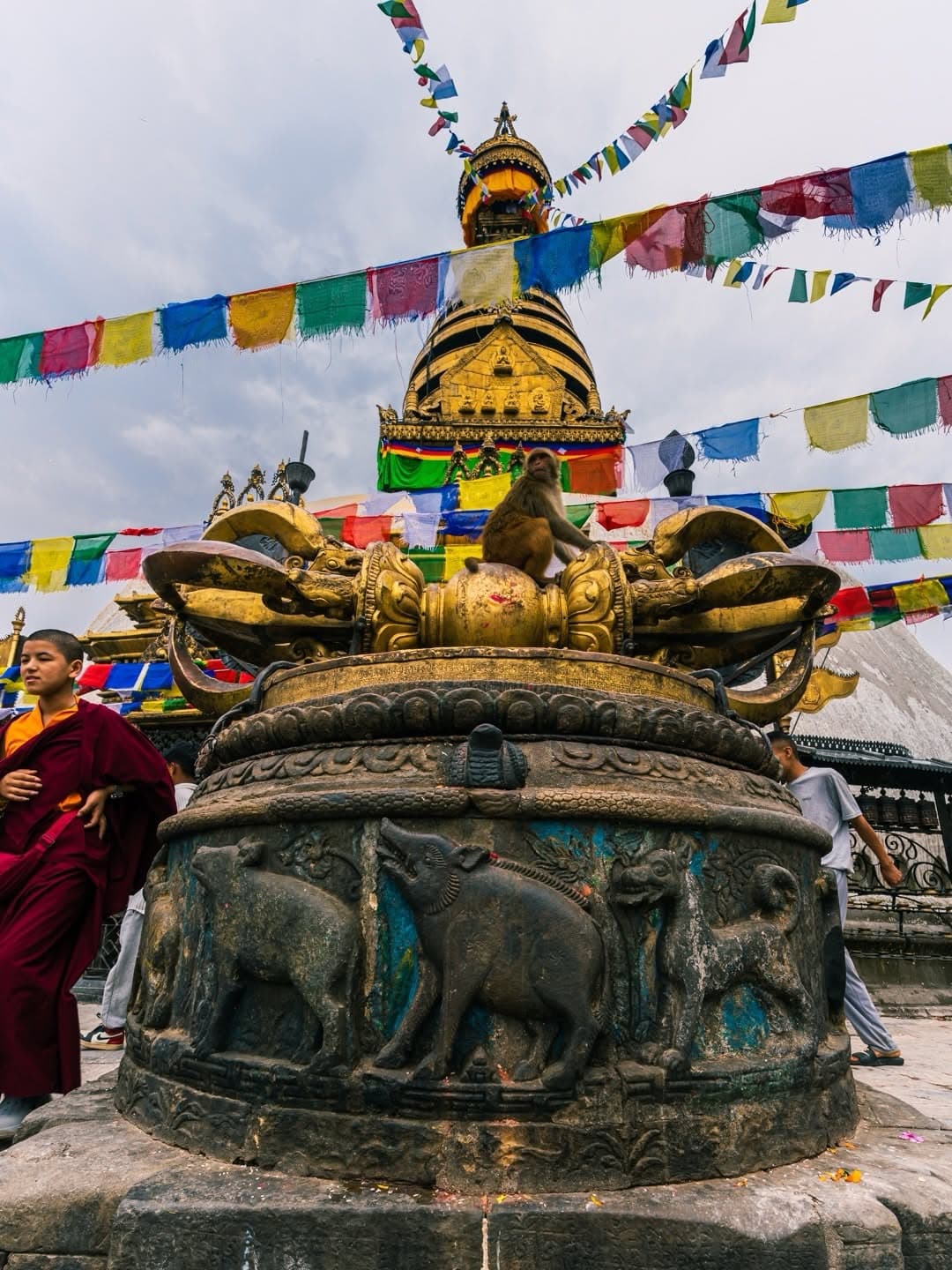
Today will be a day to become acquainted with the wonderful culture of Nepal as you visit several of the Valley's World Heritage Sites. An expert Trekking Mart city guide will guide to visit Pashupatinath, the most sacred Hindu temple in Nepal, along with two sacred Buddhist shrines: Swayambhunath and Boudhanath. Understanding a bit about Buddhism and Tibetan culture will help you to better appreciate the culture of Tsum Valley In the afternoon, there will be a briefing about the trip as you meet your trip leader. Overnight stay in the hotel.
Meals: Breakfast only
After morning breakfast, we will take our 7–8-hour scenic drive from Kathmandu to Soti Khola (730m) located in the Gorkha district which is the entry point to the Tsum Valley Trek. The route follows Prithvi Highway along the Trishuli River. The route turns north via Dhading and Salyantar. During the journey there will be a lot of scenic terraced hills and farms to see. We observe traditional villages and if the weather is clear the stunning Shringi and Ganesh Himal ranges will also be visible. The route also goes through Arughat town which is the biggest town in the Budhi Gandaki Valley. Our journey turns north to follow the wild Budhi Gandaki River to Soti Khola. When we reach there, we will get some rest and prepare the tomorrow trek. Overnight stay at Soti Khola.
Meals: Breakfast, lunch and dinner
Today, we begin our first day of trekking from Soti Khola. The walk takes us alongside the Budhi Gandaki River through refreshing subtropical forest areas, lovely native villages, terraced fields, and diverse flora and fauna. Along the way, the trail will also lead to the traditional Gurung village of Labubesi, whose inhabitants are mostly of Mongolian origin. After Labubesi, we climb behind a rock outcropping as the valley suddenly unfolds before us. The scene is breathtaking as you gaze upon the splendid Budhi Gandaki River and beautiful surrounding hills. We should climb down to the sandy riverbed and walk on the round stones and cross onto several suspension bridges before getting to the tranquil riverside village of Machhakholagaon (870m). Mostly of the day, we will be trekking (approx. 6–7 hours). We will stay overnight at the local teahouse.
Meals: Breakfast, lunch and dinner
We start our day after having breakfast at the teahouse. We begin with a crossing the Machha Khola and following the Budhi Gandaki River toward its source. Apart from that, the hiking trail has a chain of narrow paths, suspension bridges, and gentle slopes which makes a great and thrilling start to the amazing and wild beauty of the Manaslu region. On the way, we will visit the village of Khorlabesi and the natural hot springs at Tatopani. As you approach Tatopani, you will feel the temperatures rising as hot water drips off the rocks. After that, we'll still be moving through the deep river valleys and magnificent cliffs. On reaching the other side of the river we reach Yaru Khola via a suspension bridge. We will be going through some traditional stone staircases, walking down to the riverside again, followed by walking up to the Tharo Bharyang. We will cross to the west bank of the Budhi Gandaki River through scenic ridge lines and riverbanks. Our journey will climb upwards to reach the beautiful stone-paved village of Jagat (1,340m). Jagat is the starting point of the Manaslu Conservation Area; we will take permits and rest for the night.
Meals: Breakfast, Lunch and dinner
After morning breakfast, we begin our trek by crossing the rock ridge into Salleri, where we get the chance to see some fantastic sights of the Budhi Gandaki Valley and the hills around. We move on to the traditional village of Sirdibas, and then proceed to trek through the increasingly wide valley to Ghatta Khola and up to Philim, a large Gurung village famous for its culture and magnificent scenery of the mountains. At Philim, we take the path north through the dense forests as the valley becomes narrower and offers magnificent views of the Himalayas. We are high above the river below us and it is not uncommon to see eagles flying below us in that deep valley. In around 6-7 hours of trekking, we reach the village of Chisapani (1,660m), where we’ll spend the night in a teahouse.
Meals: Breakfast, lunch and dinner
Today, we will enter the Hidden Tsum Valley. We will trek on the bridge across the gorge and having a view of a stunning waterfall. In the past the entrance to the valley was a hidden trail next to the waterfall. It was kept hidden to keep the valley from outsiders. Trek across pine and rhododendron forests where the views of Himalchuli and Boudha Himal are simply stunning. The trail takes us through the lovely village of Lokpa. After we pass Lungwa Khola and Siyar Khola, we climb steadily to reach the traditional Tibetan Buddhist settlement of Chumling. Chumling is encircled by splendid panoramas of Shringi Himal and is a village with an ancient monastery and nicely paved stone streets. Overnight stay at Chumling.
Meals: Breakfast, lunch and dinner
After breakfast, we trek down to cross a suspension bridge over the Syar Khola and proceed to walk along the opposite side. This trail offers some inspiring views of the Ganesh Himal with its five snowcapped peaks. The trail likes to cross the river and climb up through small settlements of Rainjam and Gho Village, crossing the Serpu Khola before a steady climb into the upper Tsum Valley. The upper valley is narrower and is home to some of the tastiest apples anywhere growing in orchards. The trail goes through deep woodland areas, and trekkers are rewarded with a magnificent vista of the mighty mountains. When the weather is good, we are able to view wonderfully breathtaking sceneries of Himalchuli and Ganesh Himal. Trek to the twin villages of Chokhangparo, the cultural heritage of Tsum Valley. There is still a great deal of the old Tibetan Buddhist tradition prevalent there with incredible hospitality received from the locals makes an unforgettable memory of the Himalayas. We will stay overnight at Chokhangparo.
Meals: Breakfast, lunch and dinner
After morning breakfast, we will continue our trek towards the upper Tsum Valley while the trail passes Lamagaon and across a suspension bridge to the old Rachen Gompa (Nunnery Gompa). Once we will see the monastery, cross the Shiar Khola and continue trekking through traditional Tibetan villages, passing by a micro-hydropower station and the old Buddha Stupa near Chhule. A small walk up to Nile, the last permanent settlement in the Tsum Valley before the Tibetan border, with splendid views of the surrounding Himalayan peaks. We will be a field for our new mountain pictures. we will experience the unique life of the Tsumba people who have their own language, culture, and Tibetan Buddhist heritage in this ancient and forbidden hidden valley. Overnight stay at Nile.
Meals: Breakfast, lunch and dinner
Today we will discover the wild Tibetan terrain by walking to the west side of the valley to Mu Gompa (3,700m) which is near the Tibetan border. We will slowly walk uphill for three hours from Nile and then at last we will arrive at the biggest and oldest monastery of the Tsum Valley. This monastery is famous for its Tibetan Buddhist culture and calm atmosphere. After visiting the old monastery, moving on Dephyu Doma Gompa, which is another major spiritual place in the area. After exploring we will return to Nile for night's stay.
Meals: Breakfast, lunch and dinner
Today, we will retrace the route back through the traditional villages of Chhule and Phurbe, before arriving at the stunning Burgi Khola. We ascend to Milarepa Cave which is a sacred meditation place of the great Buddhist Saint Milarepa. Centuries ago this Buddhist monk came to this valley and converted them from cannibalism to Buddhism which resulted in the peaceful nature of these amazing people. Because of their peaceful nature, they will not eat meat or even fish. The trail offers Poshyop Glacier, Kipu Himal and Churke Himal majestic peaks and other dramatic features of the upper Tsum Valley. Burgi Village, a gorgeous and peaceful place and is the next place to stay overnight. Besides pure mountain air, we will also be immersed in the rich culture of Tibetan Buddhism.
Meals: Breakfast, lunch and dinner
Today, we will descend down from the Burgi Village while soaking in the beauty of the lush vegetation and the tranquility of upper Tsum Valley. We will walk along the route to Chhokangparo again and proceed to Gho Village, a place from which you will be able to see beautiful panoramas of Ganesh Himal and Himalchuli. After that, we will descend to cross the suspension bridge on Sarpu (Siyar) Khola. From here we will head to the forest where the route will lead us to Chumling. When we get there, we will spend night in this splendid Tibetan Buddhist village which is known for its ancient monastery, traditional stone-paved streets, and kind hospitality of Tsumba people.
Meals: Breakfast, lunch and dinner
Today, we will leave f the secret Tsum valley. Continue to return back by down through Lokpa on the way where we can enjoy the lovely views of forests, waterfalls, and deep river gorges. After lunch, we will continue on an easy path and be amazed by the spectacular Samba Waterfall before you get back to Budhi Gandaki Valley at Ekle Bhatti. The river passing through traditional Gurung villages and will reach to Philim, a very beautiful village main also the access point for the Ganesh Himalayan Base Camp route. We will spend overnight at Philim.
Meals: Breakfast, lunch and dinner
After breakfast, we will start our returning journey from Philim to Khorlabesi going through Jagat and Tatopani. The trail drops downward through Sirdibas, Jagat, and Yaru Phant where the dry Tibetan scenery changes little by little into beautiful subtropical forests and green hills. Going on through Dobhan, we will get to Tatopani where there is a natural hot spring. After that, we will follow the lovely pathway with the ups and downs before reaching to Khorlabesi. We will spend the overnight at Khorlabesi.
Meals: Breakfast, lunch and dinner
Today our final day of trekking begins from Khorlabesi to Soti Khola. We will cross the Tharo Khola through a gorge dotted with rocks and also visit some traditional villages. Enjoying the beauty of two waterfalls on both sides of Budhi Gandaki River. Few hours of walking passes and we will reach Khursane. We will trek along the river, above the ridge, in the middle of huge and calm Sal forests. By crossing of the suspension bridge brings us back to Soti Khola. Overnight stay at Soti Khola.
Meals: Breakfast, lunch and dinner
After breakfast, we will begin our drive from Soti Khola to Kathmandu. Along the way, the route will follow through Kyorpani, Arkhet, and Sante Bazaar. We will cross the Arkhet Khola river as depart from the Budhi Gandaki Valley. Driving further via Maltar and Arughat Bazaar, we will be moving along Marsyangdi and Trishuli Rivers. We will have the spectacular views of lush green hills, terraced fields, mountain landscapes, and traditional villages. Reaching to Kathmandu, we will be checking in our hotel. At evening, we will be rejoicing the successful end of our Tsum Valley Trek with a farewell dinner.
Meals: Breakfast, lunch and dinner
Your friends from Trekking Mart will pick you up from the hotel. At about 3 hours prior to your flight time, we transfer you to the airport to fly to your onward destination. Trekking Mart is very grateful to you for choosing to travel with us and looks forward to seeing you again for another mind-blowing adventure. Trekking Mart family wishes you the best time ahead.
Meals: Breakfast only
Include / Exclude
Service Included
- ✓
Airport pickup and drop off
- ✓
Day 2 Kathmandu guided city tour by car
- ✓
Hotel in Kathmandu with breakfast (We offer 3 to 5-Star luxury hotels)
- ✓
Meals (Breakfast, Lunch, Dinner) during the tour
- ✓
Lodge to lodge accommodation during the trek
- ✓
An experienced English-speaking trekking guide.
- ✓
Local porters to carry your baggage
- ✓
Staff food, accommodation, salary & insurance.
- ✓
Welcome dinner with cultural show.
- ✓
All governmental procedure
- ✓
Applicable Taxes
- ✓
Rescue arrangement in case of emergency
Service Excluded
- ✘
International flight (If you need, we are happy to assist you on it).
- ✘
Nepal visa fee
- ✘
Travel Insurance
- ✘
Lunch & dinner other than mentioned
- ✘
Bar and laundry bills
- ✘
Emergency rescue/evacuation costs
- ✘
Tips for guide & porter
Trip Resources
View the trekking route map and itinerary.
4.9 ★★★★★
Tripadvisor reviews
Activity
Trekking
Duration
17 Days
Grade
Difficult
Essential Information
We've compiled some of our Frequently Asked Questions to help you learn more about this amazing trip.
All travelers (except Indian nationals) must have a passport valid for at least six months from the date of arrival in Nepal.
Tourist visas are available:
On arrival at Tribhuvan International Airport
At major land border immigration offices
At Nepali embassies and consulates abroad
Travel insurance is strongly recommended, especially for trekking and climbing activities. Your insurance should cover emergency medical treatment and evacuation. Although it is possible to travel without insurance, Trekking Mart requires a written declaration stating that you accept full responsibility if you choose not to have coverage.
The climate of Nepal is largely influenced by the monsoon season, resulting in distinct travel periods throughout the year:
Dry Season: October to May
Monsoon Season: June to September
The best times to visit are October–November and March–May, when Himalayan views are at their clearest and the landscapes are especially vibrant. From February to May, warmer temperatures make high-altitude trekking more comfortable and enjoyable.
Trekking in Nepal requires a good level of physical fitness, as it involves long walking hours on uneven, and often steep, terrain.
To prepare for your trek, the following are recommended:
Regular physical exercise (walking, hiking, cardio training)
Participation in sports or endurance activities
Yoga or flexibility training
It is also advisable to consult your physician for a full medical check-up prior to travel to ensure you are fit for trekking.
No vaccinations are mandatory for entry into Nepal. However, travelers may consider the following vaccinations based on personal health needs, travel plans, and medical advice:
Cholera
Meningitis
Tetanus
Diphtheria
Typhoid
Gamma Globulin (for short-term protection against certain infections, such as hepatitis A)
It is recommended to consult a healthcare professional or travel clinic before your trip to determine which vaccinations are appropriate for you.
All Trekking Mart trek leaders are trained in first aid and carry essential medical equipment. However, clients are strongly advised to bring a personal first-aid kit to handle minor health issues during the trek.
Suggested Items:
Pain relief medication (e.g., Aspirin or Panadol)
Antihistamines for allergies
Medication for stomach upsets (e.g., Imodium)
Oral rehydration salts
Antiseptic cream and antibiotic powder
Water purification tablets
Throat lozenges
Eye drops
Antacid tablets
Calamine lotion (for skin irritation or insect bites)
Bandages and plasters
Small scissors and tweezers
ATMs are widely available in Kathmandu and other major towns. Credit cards are accepted in most hotels, restaurants, and shops in tourist areas, though smaller establishments may prefer cash.
Currency exchange services are available at Tribhuvan International Airport and throughout Kathmandu, including banks and licensed exchange counters.
When trekking in remote areas, ATMs and card facilities are often unavailable. Therefore, it is recommended to carry sufficient cash (in Nepalese Rupees) to cover:
Personal expenses
Extra meals and beverages
Tips and gratuities
Additional accommodation if required
Additional Tips
Withdraw or exchange money before starting your trek.
Carry small denominations for convenience in remote areas.
Inform your bank before traveling to avoid issues with card usage abroad.
Your safety is our highest priority. Trekking Mart guides are trained and experienced, and they have full authority to modify, cancel, or reroute any part of the itinerary, if necessary, due to safety concerns, weather conditions, or other unforeseen circumstances.
While every effort is made to complete all trips as planned, conditions in the mountains can be unpredictable. Therefore, a flexible attitude and cooperation from all participants are essential to ensure a safe and enjoyable trekking experience.