Everest Base Camp Trek Difficulty: What to Expect Before You Go
The Everest Base Camp trek is a demanding high-altitude journey that many well-prepared beginners can complete. Walking through Sherpa villages, crossing suspension bridges and approaching the Khumbu Glacier make the Everest Base Camp trek an unforgettable Himalayan journey. But before you set off, one question deserves an honest answer: how difficult is the Everest Base Camp trek?
You do not need mountaineering experience, but you do need stamina, preparation and enough time to acclimatize. The trek is physically demanding, mainly because of its altitude and consecutive walking days.
Here is what to expect and how to prepare for the challenges ahead
Everest Base Camp Trek Difficulty: Key Challenges
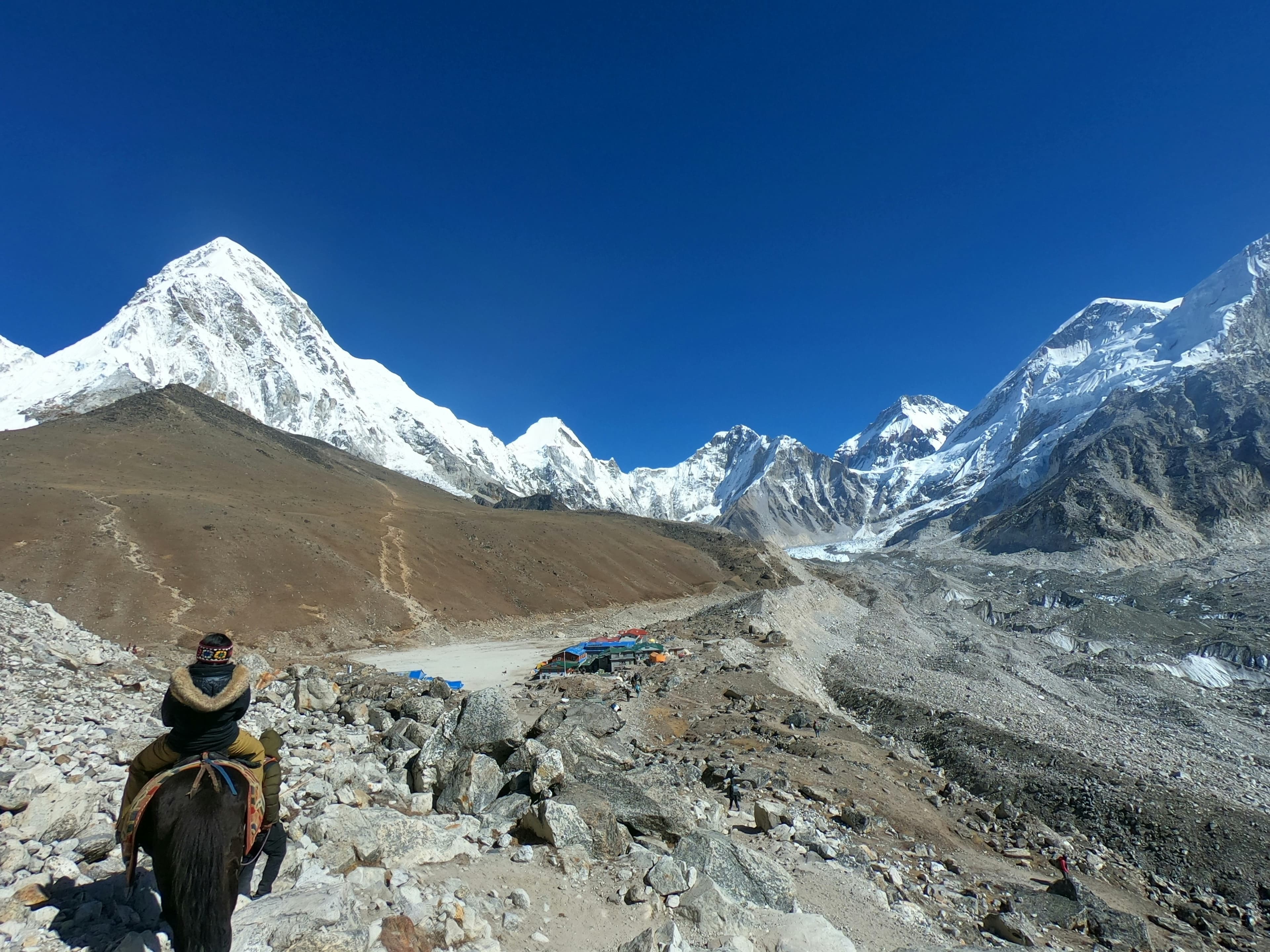
High altitude: Experience thinner air as you ascend through Dingboche (4,410m), Lobuche (4,940m) and Gorak Shep (5,164m) to Everest Base Camp (5,364m).
Long Walking Days: Several hours of daily hiking over consecutive days demand good fitness, stamina and a steady pace.
Changeable Weather: Weather conditions can be unpredictable, with cold nights, strong winds, rain, and even snow.
Challenging Terrain: The trail features rocky paths, steep climbs, and uneven steps, demanding careful navigation and a steady pace.
Basic Accommodation: You'll stay in simple teahouses along the way, offering limited amenities and comforts compared to what you're used to.
Physical and mental endurance: Managing fatigue over consecutive trekking days will require good physical and mental stamina.
How Difficult Is the Everest Base Camp Trek?
The standard Everest Base Camp trek is a demanding trek rather than a technical mountain climb. Its difficulty comes from combining sustained walking with increasingly high elevations. A climb that feels manageable near the beginning can feel much harder higher up. Even shorter stages may require frequent breaks, and recovering between trekking days becomes an important part of the journey. Your experience will depend on your fitness, acclimatization, walking pace, weather and itinerary. The goal is to walk steadily and adjust safely, rather than reach each stop as quickly as possible.
The Six Main Challenges Explained
High Altitude: The Biggest Challenge
Everest Base Camp lies at approximately 5,364 metres (17,598 feet), while the optional Kala Patthar viewpoint reaches around 5,545 metres (18,192 feet). At these elevations, lower air pressure means less oxygen is available with each breath, making uphill walking more strenuous even at a slow pace. Physical fitness helps you manage the effort, but it does not prevent altitude sickness. Gradual ascent and proper acclimatisation are essential, although they cannot eliminate the risk completely.